
IT Outsourcing China: Guide for SMEs in 2026
How IT Outsourcing in China Benefits Your Company
When people talk about IT outsourcing in China or search for phrases such as “IT outsourcing China”, they often focus only on day rates and hourly fees. For an international SME running a 30‑person office or factory in Shanghai, Beijing, or elsewhere in China, the more important question is how much poor IT is already costing you.
Based on NETK5 client experience, an office of that size can easily lose around RMB 3,000 (about USD 400) for every hour of IT downtime. That includes waiting for email to load, fighting with printers, or an unexpected internet or server outage that stops operations completely.
If you and your team deal with these disruptions regularly, the real cost climbs fast. At that point, getting professional help is no longer a luxury; it is a straightforward business decision that protects revenue, productivity, and staff morale.
Hiring a full‑time, qualified IT engineer inside your company sounds attractive, but it comes with significant financial and management overhead. You need to find and assess candidates, keep them motivated, cover vacations and sick leave, and pay for the tools they require.
IT outsourcing in China offers another path: you engage a specialist company that takes care of your day‑to‑day IT, while you stay focused on running and growing the business. A good partner will handle background work such as patching servers and PCs, checking that backups complete successfully, managing cybersecurity, running an IT helpdesk for your users, and fixing issues before they turn into downtime.
As management thinker Peter Drucker famously put it, “Do what you do best and outsource the rest.”
This article looks at four practical reasons SMEs choose IT outsourcing in China, plus what you need to know about compliance, technology stacks, and the true cost comparison.
Reason 1: Avoid the Overhead of Hiring In‑House IT

Your first instinct may be to hire your own IT engineer. Having a specialist sitting in your office, reporting directly to you and joining company meetings, feels reassuring and straightforward.
In practice, a permanent hire becomes expensive very quickly, especially in major cities in China.
You take on costs such as:
A competitive salary to attract someone experienced enough to run your entire environment alone.
Employer taxes, social insurance, and housing fund contributions.
Bonuses, benefits, and annual salary reviews.
Time from senior managers to interview, test skills, and manage that person once they join.
The risk and disruption when your IT engineer is sick, on vacation, or leaves the company.
There is also the hidden cost of tools. A capable in‑house engineer needs:
Monitoring platforms
Remote management tools
Backup software
Documentation systems
Security products
Purchasing, integrating, and maintaining these tools just for one company in China adds up quickly and ties up capital that could support core business activities instead.
In contrast, with IT outsourcing in China, a managed service provider spreads these costs across many clients:
They recruit, train, and retain a whole team of engineers.
They invest in professional‑grade tools and renew them on schedule.
They build processes once, then apply them repeatedly across clients.
You pay a predictable monthly fee that is often lower than the full monthly cost of a single experienced IT manager, while gaining access to a broader range of skills and better coverage.
Reason 2: Get a Complete IT Team for Every IT Need
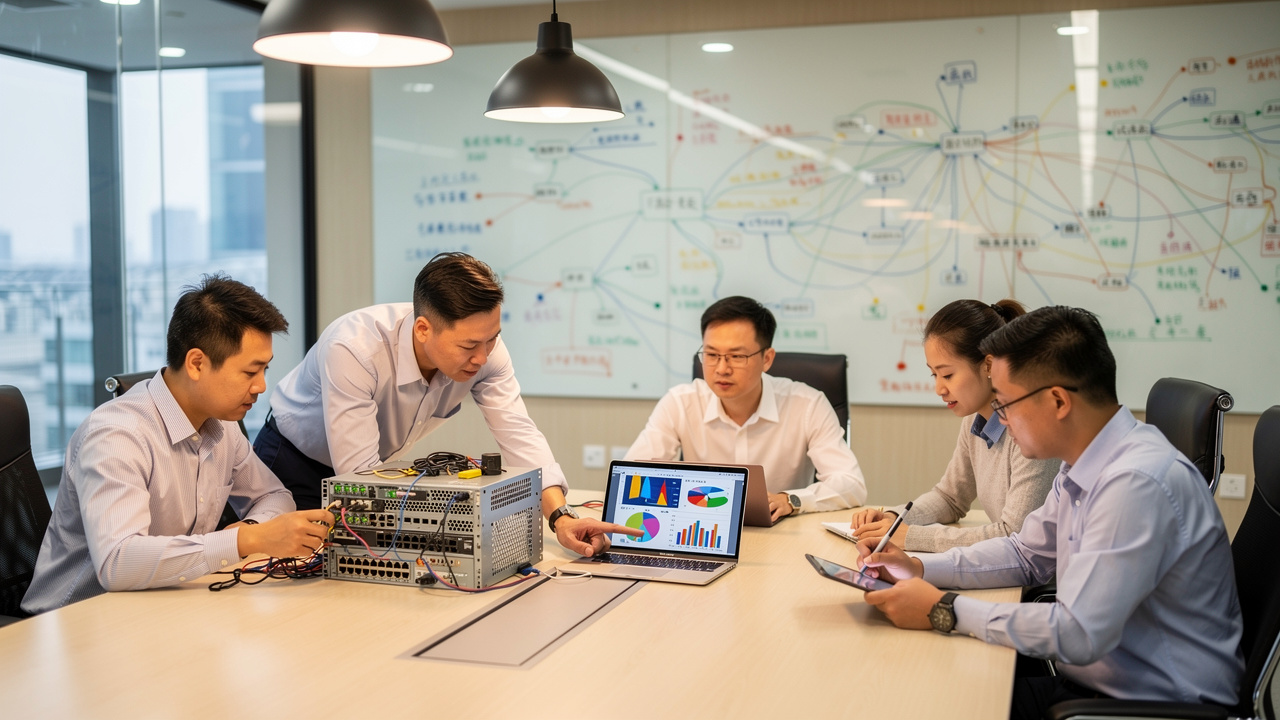
You can hire a highly specialized engineer, or you can hire a generalist who knows a bit of everything. IT, however, is simply too broad for one person to be an expert in every area.
Running servers securely requires a different skill set than designing wireless networks in a warehouse. Supporting email and collaboration platforms is different again from hardening firewalls or planning a cloud migration. When projects overlap, a single in‑house engineer can quickly become a bottleneck.
An experienced IT outsourcing partner in China gives you access to an entire team. Within that team, engineers tend to focus on particular areas:
Network and Wi‑Fi design and troubleshooting
Servers, storage, and cloud platforms
Cybersecurity and compliance
Business applications and integration
End‑user support and helpdesk
Depending on the task, the right person steps in, or senior specialists coach others. This means your requests are handled more quickly and more effectively, whether you are rolling out new laptops, setting up a new factory site, or recovering from an incident.
Good providers also maintain a network of trusted partners in related fields. That might include hardware and software vendors, structured cabling contractors, CCTV installers, telecom and PBX specialists, Shanghai Hosting for local hosting, or QPSoftware for web design. Instead of you coordinating multiple vendors alone, your outsourced IT team can coordinate and speak the same technical language across all parties, saving you time on every project.
From your side, you have a single point of contact for the whole IT outsourcing in China relationship, while behind the scenes a full team handles the specialized work.
Reason 3: Flexible Team Augmentation for Special Projects
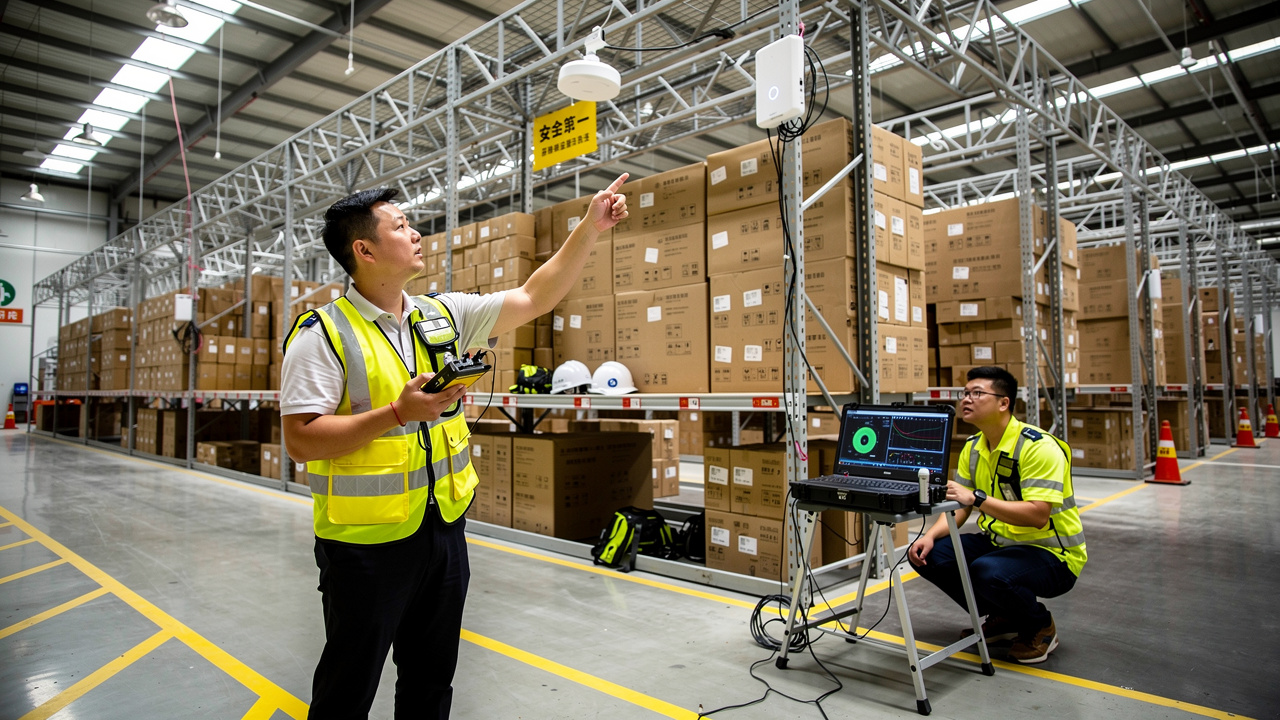
For larger SMEs and regional offices, hiring your own IT manager or small internal support team can still make sense. They know your line‑of‑business applications, your factory floor, and your internal reporting requirements.
Even then, in‑house teams are generally tuned for everyday support: password resets, setting up new employees, ordering equipment, or liaising with headquarters. Certain projects require skills, tools, or capacity that your team does not have.
Typical examples include:
Professional Wi‑Fi site surveys that require specialist training and measurement equipment
Large‑scale network cabling across floors or new buildings
Data recovery from failed storage devices
Moving on‑premises servers into a cloud or co‑location data center
Upgrading or redesigning a multi‑site VPN and firewall design
Providing 24/7 monitoring and incident response across time zones
In a co‑managed model, IT outsourcing in China does not replace your internal staff. Instead, the external team augments them on selected projects or provides second‑level support and after‑hours coverage. Your internal team keeps control of daily operations while being able to call in extra capacity and specialist knowledge when needed.
This approach lets you deliver complex projects in China on time and with lower risk, without committing to permanent headcount that might sit idle between initiatives.
“Outsourcing is just a tool. Management of that tool determines success.” — Michael F. Corbett, author on outsourcing strategy
Reason 4: Knowledge Transfer and Expert Training
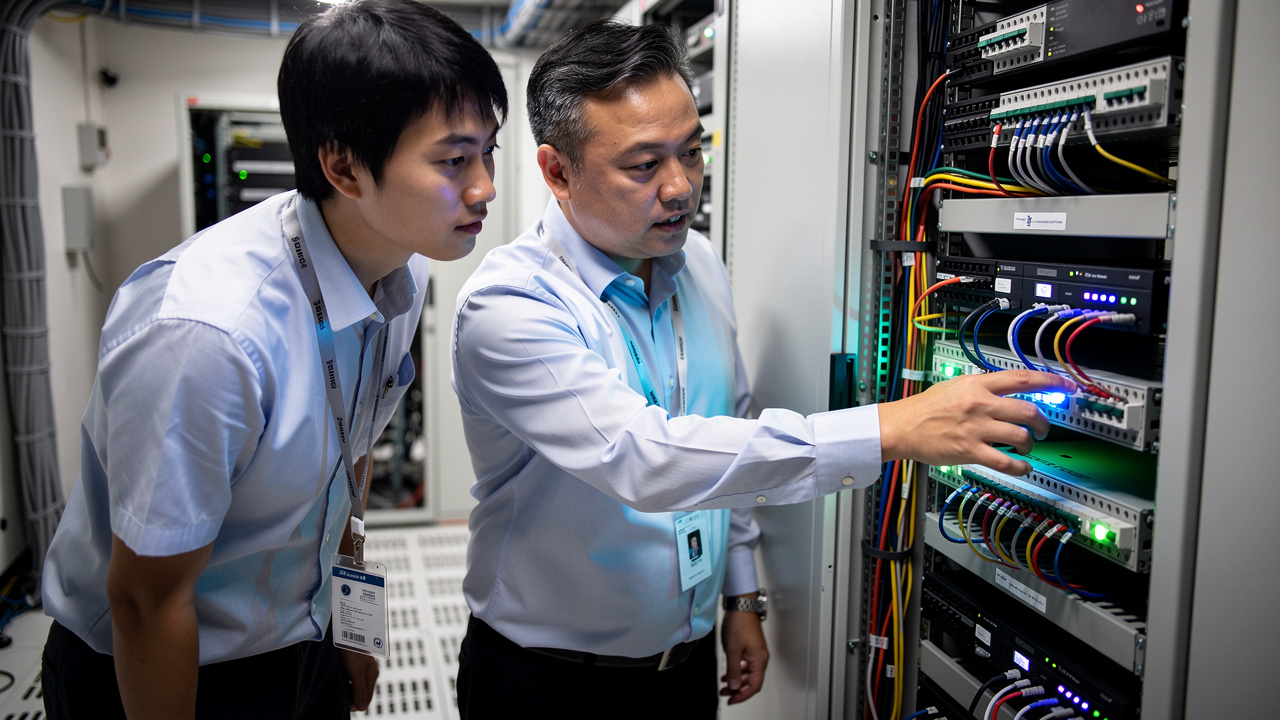
Once you have a co‑managed model in place, the next logical step is to grow the skills of your own team. A strong IT outsourcing partner in China should not keep knowledge to itself; instead, it should help your internal staff become more capable over time.
Your IT provider spends every day working with the technologies your business depends on. That might include Windows servers, Office 365 or its China variant, VPNs, cloud platforms, or manufacturing systems. Asking them to train your local team on routine operations makes both sides stronger.
Structured training and systematic knowledge transfer can include:
Hands‑on sessions on daily administration tasks
Walk‑throughs of backup, restore, and disaster‑recovery procedures
Security awareness training for both IT and non‑IT staff
Documentation of network diagrams, configurations, and standard operating procedures
Joint post‑incident reviews to understand what happened and how to avoid repeats
This keeps control of your infrastructure in your hands, while you still rely on external experts for advanced troubleshooting, major changes, or strategic advice.
For your employees, professional training is also a powerful retention tool. They see that the company invests in their careers, which can improve morale and reduce turnover in a competitive Chinese IT labor market.
China‑Specific Compliance, Data Security, and Connectivity

For foreign companies, IT outsourcing in China is not only about cost and skills. You also need to stay aligned with Chinese data protection rules and deal with connectivity realities such as the Great Firewall. A local managed service partner can help you design IT that fits both your global standards and Chinese regulations.
Important: The following is general information, not legal advice. Always confirm details with qualified legal counsel in China.
Personal Information Protection Law (PIPL)
China’s Personal Information Protection Law (PIPL) sets strict requirements for how organizations collect, store, and use personal data. If your Chinese entity processes employee, customer, supplier, or visitor data, PIPL almost certainly applies.
Key points that affect IT outsourcing in China include:
Legal basis and consent – You must have a clear legal basis (such as HR management or contract performance) and, in many cases, informed consent before processing personal data.
Data minimization – Systems should only collect the data they truly need, and for clear purposes.
Data subject rights – Individuals have rights to access, correct, and in some cases delete their data. Your IT systems and processes must support these requests.
Processor management – When an outsourcing provider in China processes personal data on your behalf, you remain responsible. Contracts and technical controls should define exactly what data is processed, for which purposes, and how it is protected.
A capable IT outsourcing partner will help you map data flows, configure systems in a privacy‑aware way, and maintain records that support PIPL compliance.
Data Security, Hosting Location, and MLPS 2.0
Alongside PIPL, China’s Data Security Law and Cybersecurity Law introduce additional requirements for protecting important data and critical information infrastructure.
Most companies with systems accessible from within China must meet at least level‑2 requirements under the Multi‑Level Protection Scheme (MLPS 2.0). For IT operations, that typically means:
Classifying systems and data according to business impact
Applying standard controls such as access management, logging, encryption where appropriate, and security monitoring
Making sure that key business systems hosted in China use compliant data centers and registered internet connections
For certain sectors or for organizations deemed critical information infrastructure operators, there may also be expectations around keeping designated data inside mainland China and performing security assessments before transferring data overseas.
An experienced IT outsourcing China provider understands how to combine your global security standards with local hosting options, whether through major cloud platforms in China or compliant local data centers.
VPNs, the Great Firewall, and Cross‑Border Links
Cross‑border connectivity is one of the most misunderstood topics for international companies operating in China.
Unlicensed VPN services and consumer tools that attempt to bypass the Great Firewall can create regulatory risk and unstable connections. At the same time, your offices in China still need reliable access to global applications, data, and collaboration tools.
When you work with a local IT outsourcing partner, you can design a legal and stable approach, which may include:
Dedicated international private lines or SD‑WAN services purchased from approved Chinese carriers
Secure site‑to‑site VPNs that run over registered circuits
Placing selected services—such as mail, file sharing, or ERP front‑ends—on cloud platforms hosted in mainland China to reduce latency for local users
Careful traffic segmentation so that only what truly needs to cross borders does so, with appropriate encryption and logging
Getting connectivity and compliance right at the same time is one of the strongest reasons to use an IT outsourcing China partner with experience in both technical design and local regulation.
Typical Technical Stack for IT Outsourcing in China
The value of IT outsourcing in China also depends on the technologies your partner can support. For international SMEs, the environment in China is often a mix of global and China‑specific platforms. A mature provider should be comfortable with both.
Below is a sample of the technical stack and service areas that a partner such as NETK5 can cover.
Managed Infrastructure and Cloud
Public cloud in China – Microsoft Azure operated by 21Vianet, Alibaba Cloud, and AWS China regions
Private and hybrid cloud – Virtualization platforms, on‑premises servers, and co‑location in compliant data centers
Managed networking – Switches, routers, SD‑WAN, and secure Wi‑Fi for offices, warehouses, and production sites
Local and international hosting – Working with providers such as Shanghai Hosting for websites and online services aimed at users in mainland China
End‑User Productivity and Collaboration
Office 365 China (21Vianet) – Exchange, SharePoint, OneDrive, and Teams hosted inside China to improve performance and align with regulations
Global Microsoft 365 tenants – Hybrid scenarios where Chinese users connect securely to a global tenant
Identity and access management – Azure AD, local Active Directory, single sign‑on, and multi‑factor authentication
Endpoint management – Windows and macOS device management, mobile device management, and standard build images
Cybersecurity, Backup, and Business Continuity
Perimeter security – Enterprise firewalls, intrusion detection, secure remote access, and email security
Endpoint security – Anti‑malware, endpoint detection and response (EDR), and device hardening
Backup and disaster recovery – Server, cloud‑application, and workstation backups, on‑site and off‑site, with tested restore procedures
Monitoring and helpdesk – 24/7 monitoring, patch management, and an IT helpdesk that supports users in both English and Chinese
Application support – Web and mobile applications built with .NET, Java, PHP, Python, Node.js, and front‑end frameworks such as React and Angular, plus databases such as SQL Server, MySQL, PostgreSQL, and MongoDB
For many international firms, this mix of infrastructure, productivity, and security services is the foundation of successful IT outsourcing in China.
Cost Comparison: In‑House IT Manager vs Outsourced IT Team in China
To decide whether IT outsourcing in China makes sense, you need to compare the total cost of ownership (TCO) of building your own IT capability in China versus using a managed service provider.
The example below shows typical monthly costs for a mid‑sized SME office in Shanghai. Actual numbers will vary by city and seniority, but the pattern is representative.
| Cost Item | Internal IT Manager (Full‑Time) | Outsourced IT Team (Managed Service) |
|---|---|---|
| Base monthly fee / salary | ~RMB 35,000 salary | ~RMB 25,000–35,000 managed service fee |
| Employer social insurance, housing fund, benefits | ~RMB 10,500 | Included in provider pricing |
| Annual bonus (averaged monthly) | ~RMB 2,900 | Included in provider pricing |
| Training and certifications | ~RMB 2,000 | Spread across many clients |
| Professional tools (monitoring, backup, security) | ~RMB 3,000 | Included in provider pricing |
| Cover for sickness, vacation, turnover | ~RMB 1,500+ | Covered by provider’s wider team |
| Office space, equipment, HR overhead | ~RMB 3,000 | Minimal (mainly meeting time) |
| Estimated monthly TCO | ~RMB 57,000+ (about USD 8,000+) | ~RMB 25,000–35,000 (about USD 3,500–4,900) |
Even before counting the business impact of downtime, an outsourced IT team in China usually costs significantly less than one senior in‑house hire, while covering more hours and a wider set of technologies.
For many foreign‑invested SMEs, this is the financial foundation for choosing IT outsourcing in China as a long‑term strategy rather than a temporary fix.
How to Select the Right IT Outsourcing Partner in China
Once you decide that IT outsourcing in China is the right direction, the next question is who to work with. The Chinese IT services market includes everything from small teams of under 20 people to very large providers with thousands of engineers across multiple cities, reflecting the scale and diversity described in analyses of China’s outsourcing market landscape.
When you evaluate partners, consider the following:
Location and coverage – Providers based in Shanghai, Beijing, Shenzhen, Guangzhou, Hangzhou, or Wuxi can usually reach major industrial and commercial centers quickly. Check whether they can support all your sites, including factories in secondary cities.
Experience with international clients – Look for references from foreign‑invested enterprises or global groups. The provider should be comfortable working in English and Chinese, and with reporting lines that include overseas headquarters.
Service scope and technical depth – Confirm that the team can handle your current needs (helpdesk, servers, cloud, networking) and likely future projects (for example, cloud migration, new plant roll‑outs, or security upgrades).
Security and compliance posture – Ask about certifications such as ISO 27001, how they handle access to your systems, where monitoring data is stored, and how they support PIPL and MLPS 2.0 obligations.
Support hours and response times – Make sure service‑level agreements (SLAs) reflect your business reality, including factory shifts, regional time zones, and critical month‑end or peak periods.
Transparent pricing – A good provider will give clear monthly fees for managed services, separate project pricing, and no surprises on hourly rates or travel costs.
Treat the selection process much like hiring a key employee, but with the advantage that changing providers is still easier than rebuilding an internal IT department if your needs change.
Summary: Is IT Outsourcing in China Right for Your SME?
IT outsourcing in China is no longer just about saving money. For international SMEs and regional offices, it is a practical way to reduce downtime, access a complete team of specialists, meet compliance obligations, and support growth without adding complex headcount.
By comparing the total cost of ownership, considering China‑specific regulations such as PIPL and MLPS 2.0, and choosing a partner with the right technical stack and service culture, you can build an IT environment that supports the business instead of holding it back.
If you are responsible for operations, IT, or finance in China and want to see how these ideas apply to your own offices or factories, start a conversation with a trusted local provider such as NETK5. A short discovery call and assessment can quickly show where outsourced IT support can reduce risk and free your team to focus on what matters most: serving your customers and growing your presence in China.






 English
  Chinese