

Hospitality WiFi survey in Zhongshan
Looking for Hospitality WiFi survey in Zhongshan? NETK5 has surveyed and optimised wireless for hotels, residences and conference venues in China since 2002. Our engineers measure with Ekahau, floor by floor, including the corridors and lifts where guest devices actually lose their connection. We survey venues of every size — from a boutique property to a multi-building resort.
Hotel WiFi is judged in guest reviews, not in dashboards. A guest does not care that eighty percent of the building is covered — they care about their own room, their own video call and their own stream. A survey is how you find out what they will experience before they write about it.
Why wireless fails in Zhongshan hotels
- Guest density. A lobby at breakfast, a banquet hall at a gala, a bar at midnight — each is a different capacity problem in the same building.
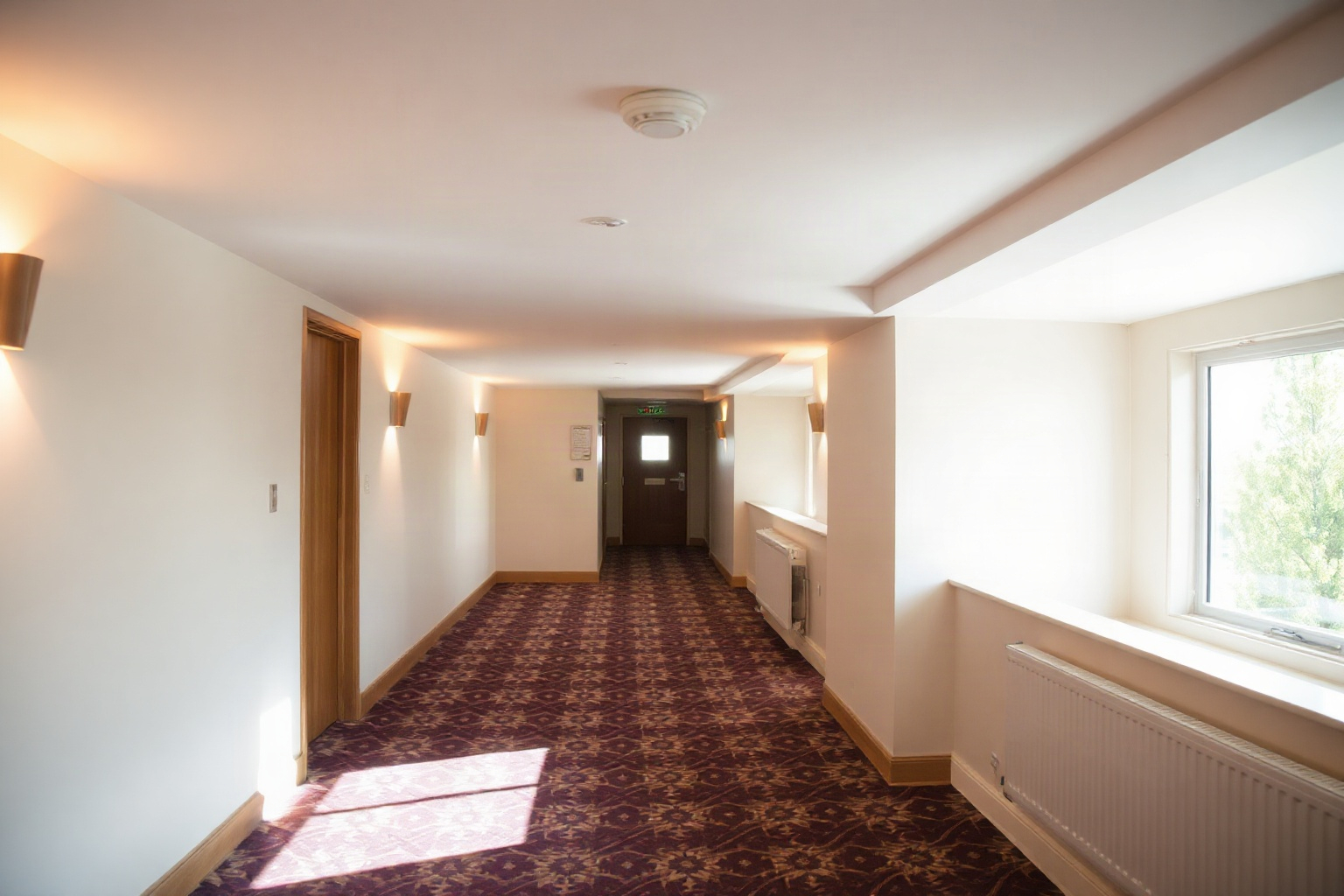
- Corridors and lifts. Guests move between floors constantly. Roaming that is fine in an office fails against concrete lift shafts and fire doors.
- One guest, several devices. Phones, laptops, tablets and wearables, all expecting to work at once.
- In-room coverage. The room at the end of the corridor is the one that gets complained about.
- Events. Conference and banquet spaces need capacity that the rest of the hotel does not.
- Back of house. POS terminals, housekeeping tablets and door locks share the air with guests.
- Neighbours. In dense urban districts, neighbouring hotels occupy the same channels.
What Hospitality WiFi survey in Zhongshan covers
- Guest coverage survey, floor by floor, including corridors, stairwells and lifts
- Capacity planning for lobby, bar, restaurant, meeting and banquet spaces
- Roaming design across floors, with evidence rather than assumption
- In-room coverage checks, including the rooms furthest from the corridor access points
- Back-of-house and building systems: POS, access control, housekeeping devices, CCTV
- Guest network design: onboarding, isolation, bandwidth fairness
- Pre-opening surveys for new builds and refits, before ceilings close
How we run it
- Brief. Floor plans, guest-room counts, event spaces, brand or group standards to meet, and the complaints that prompted the call.
- Predictive plan. Off-site modelling of candidate AP positions and capacity per area.
- On-site survey. Passive survey of guest areas floor by floor, plus AP-on-a-stick validation at real mounting points, including occupied corridors and lifts.
- Tune. Channel, power, band steering and roaming settings adjusted against the measurements.
- Report and handover. Heat maps, findings and a remediation plan, presented to engineering and to the GM’s team in language they can act on.
Who we do this for in Zhongshan
- International hotel groups and their local engineering teams
- Independent and boutique properties where the network is part of the rate
- Conference and event venues with dense, temporary demand
- Brands and retail flagships with hospitality-grade guest expectations
- Global IT teams and integrators who need local measurement and reporting
What you get
- Ekahau survey report with coverage, capacity and interference heat maps, floor by floor
- AP placement and configuration schedule, by area
- Roaming evidence across floors and near lifts and stairwells
- Guest-network recommendations: onboarding, isolation, fairness
- A written remediation list if the existing network is the problem
Where we work
We are not a single-city provider. NETK5 dispatches engineers across mainland China: our own team is based in Shanghai, Beijing, Guangzhou and Hong Kong, and we staff projects elsewhere in the country as clients need them — Xi’an, Chengdu, Suzhou, Taixing and beyond. Outside China we have delivered rack-and-stack work and WiFi surveys in Japan, Korea, Singapore and Taiwan, usually for international companies coordinating several sites from a head office that has never been on site.
For Hospitality WiFi survey in Zhongshan that matters in practice: work can be planned around a visit rather than a relocation, and the team that does the work hands over documentation the head office can actually use.
Our experience
Since 2002 we have delivered wireless, network and IT work for clients including McKinsey, Pfizer, Siemens, Nestlé, JLL and Supreme NYC — offices, production sites and flagships across China, and for our partner clients across APAC. Our closest comparable work is in medicalised residential care: for Orpea we support facilities where resident, staff and monitoring devices share the air across rooms and corridors — the same density and roaming problem a hotel faces, with far less tolerance for failure. Guest networks are designed for full occupancy, not an empty hotel.
Questions we get asked
Can you survey without closing areas to guests? Yes. We work around occupancy — including overnight or between services where that suits the property. We survey guest rooms and public areas.
We are opening a new property. When should you come in? Before ceilings close. A pre-opening survey avoids putting access points where they cannot be reached or cabled. Guest onboarding should be effortless.
Do you check the guest experience or just the signal? Both. Signal is the starting point; capacity, roaming and in-room performance are what guests notice. Back-of-house systems need the same reliability as the front desk.
Will this help our review scores? It removes the infrastructure reason for complaints. What remains is usually worth knowing too.
What do you need from us to quote? Floor plans, room counts, event spaces, and the areas guests complain about most.
Talk to us about Hospitality WiFi survey in Zhongshan
Send us the floor plans and the complaint pattern. We will tell you what a survey in Zhongshan would cover, how long it takes on site, and what it costs — before anyone travels.
 English
  Chinese