
How to Improve IT Resilience in China
Introduction
Running IT in China often feels like running two different companies at once. Headquarters expects the same tools, uptime, and policies that work at home, while local teams deal with firewalls, strict data rules, and very different vendors. Many managers only start searching for “how to improve IT resilience China” after the first serious outage or compliance scare.
IT resilience in China is far more than keeping servers online. It means respecting PIPL, CSL, and DSL, keeping data in the right place, handling slow or unstable lines, and protecting systems against cyberattacks. It also means working with local staff, carriers, and authorities in a way that fits Chinese business culture, not just global playbooks.
When international companies treat China as “just another branch,” they run into painful surprises, from blocked cloud tools to sudden audit findings. A strong approach focuses on local rules first, then builds networks, security, and processes on top of that base. With more than 15 years supporting international businesses in China, NETK5 does exactly that.
This guide walks through the key steps to build IT resilience in China based on real on-the-ground experience. It explains the regulations that shape your design, how to build a stable and secure infrastructure, and why a local IT partner often makes the difference between constant fire fighting and calm, predictable operations.
Key Takeaways
- Compliance first: CSL, DSL, and PIPL shape how networks and data stores must look, so they need to guide architecture from the first design step instead of being reviewed at the end.
- Smart network design: Stable and safe operations depend on clear segmentation and security built into every layer. Good planning covers cabling, Wi‑Fi, identity control, encryption, and realistic backup and recovery plans that match Chinese conditions.
- Local IT partner: A skilled local IT partner with real presence on site gives far better results than remote control from overseas. NETK5 acts as an extension of global IT teams, adding local knowledge, hands-on support, and ongoing compliance monitoring.
H2 Section 1 – Understand China’s Regulatory Rules Before You Build

Before a single server or cable goes in, every foreign company in China needs a solid grasp of three key laws that affect almost every technical decision.
China’s framework rests on three core laws:
- Cybersecurity Law (CSL) – sets rules for network security, logging, and in some cases data staying inside China.
- Data Security Law (DSL) – covers how data is classified and when authorities may review how it is used.
- Personal Information Protection Law (PIPL) – often compared to GDPR, and sets strict limits on how personal data can be collected, stored, and shared.
Ignoring these rules is risky. Research on cybersecurity and corporate resilience confirms that penalties can include heavy fines, forced system shutdowns, and serious damage to trust with staff, customers, and regulators. In some situations, companies may even lose the right to operate parts of their business. This is why compliance in China should be treated as basic design work, not paperwork at the end of a project.
A central theme in all three laws is data localization. Certain kinds of data, especially personal or sensitive business data, must stay on servers physically located in China. When data needs to move across borders, companies usually must run formal assessments, sign standard contracts, and sometimes seek approval from authorities. On top of that, any company hosting a website or online service in mainland China needs an ICP filing or license, which many new entrants overlook.
Compliance also never stands still — studies on the impact of China’s artificial intelligence pilot policies on enterprise supply chain resilience illustrate how rapidly evolving regulatory environments force companies to continuously adapt their technical and operational strategies. NETK5 helps clients map data flows, classify data, design hybrid or multi cloud setups that respect localization, manage ICP filings, and update systems as laws change.
As one former Chinese cybersecurity official put it:
“Data security is not a checkbox; it is part of the basic infrastructure of the modern economy.”
Treating these laws as part of your core architecture, rather than a legal side issue, makes every later step in China much smoother.
H2 Section 2 – Build a Stable, Secure, and Segmented IT Infrastructure
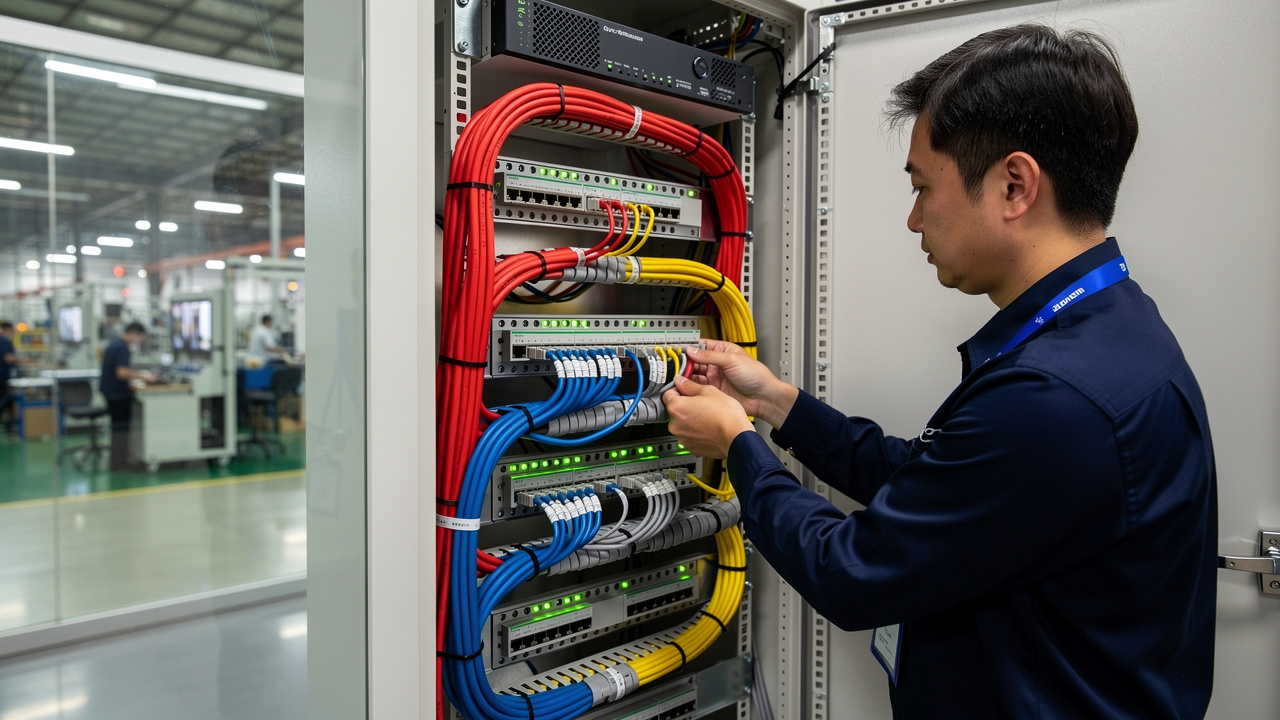
Once the regulatory base is clear, the next step is building infrastructure that can handle real-life conditions in China. Office towers, industrial parks, and large workshop floors often have thick walls, metal structures, and machine noise that cause Wi‑Fi blind spots and unstable links.
Good IT resilience starts with:
- On-site surveys to understand building materials and interference.
- Measured access point placement and careful channel planning.
- Clean, labeled cabling routed in ways that are easy to support and expand.
Routing, switching, and telecom lines need people who know Chinese carriers, building managers, and local hardware quirks. Without that, projects often stall on small details like permissions for riser rooms or delays from building management.
Network segmentation is another key part of resilience. Office traffic, guest Wi‑Fi, and production lines should sit in clearly separated zones. That way, a malware incident on a visitor laptop does not touch the manufacturing execution system or your ERP. Separating admin access from normal user access also helps keep misconfigurations and simple mistakes from spreading through the whole environment.
Security needs to be present from the first design, not added later. Clear network zones, strong identity and access management, and encryption for data both in motion and at rest give a solid base. On top of that, companies need monitoring, regular patching, and staff awareness so that phishing and ransomware do not turn into full plant outages. In China, where rules on security and data use are strict, this technical base also supports smoother audits.
As security expert Bruce Schneier famously said:
“Security is a process, not a product.”
For most international groups, China sites still need tight links to headquarters, and research exploring the relationship between artificial intelligence and resilience in manufacturing industries highlights how modern infrastructure decisions directly shape operational continuity. SD‑WAN or MPLS can provide stable, managed connections that respect Chinese regulations while keeping global systems usable. Hybrid and multi cloud designs can keep sensitive data on private hardware in China, while less sensitive workloads sit on public cloud and foreign teams access them through secure paths.
NETK5 handles the full chain from site survey to SD‑WAN rollout and disaster recovery planning, often bringing a standard office network online in two to four weeks thanks to long standing vendor and carrier relationships.
H2 Section 3 – Partner With a Local IT Expert to Sustain Resilience Long-Term

Many problems start not with bad strategy but with a gap between global plans and local execution. Headquarters teams know corporate standards and global tools well, yet they often lack Chinese language skills, local vendor contacts, and a real sense of how fast issues can snowball on site. When all decisions run through remote teams in another time zone, incident response slows down and small misalignments with PIPL or CSL remain hidden until an audit or outage forces an urgent fix.
Culture also matters more than most technical staff expect. Ideas like guanxi and mianzi shape vendor talks, service quality, and even how problems are reported. Local procurement for networking gear, telecom lines, and cloud services needs both language skill and cultural fluency in order to keep prices fair and contracts practical. Without that, foreign companies either overpay or accept weak service commitments that hurt resilience when something breaks.
A strong local partner helps you:
- Communicate clearly with Chinese vendors, landlords, and carriers.
- Align contracts and service levels with real business needs.
- Spot and fix small issues on site before they cause outages.
This is where a local partner such as NETK5 changes the picture. Engineers based near client offices and factories can visit sites quickly, talk with Chinese vendors, and solve issues in hours rather than days. Proactive checks keep systems clean and efficient instead of just “not down.” At the same time, NETK5 does not replace your global IT function. The team acts as the local hands, eyes, and ears, turning global standards into working systems that match Chinese laws and daily reality.
Conclusion
IT resilience in China rests on three connected pillars. First, companies need to design every system with PIPL, CSL, and DSL in mind so that data stays in the right place and usage stays lawful. Second, they need stable, secure, and segmented infrastructure that fits Chinese buildings, carriers, and user needs while giving headquarters clean, safe access. Third, they need a trusted local IT partner to keep everything running smoothly over time.
Resilience is not a one time project but a way of running operations. When IT in China is solid, companies can focus on customers, staff, and growth instead of constant fire fighting. If China is central to your business plans, it makes sense to start with a strong technical base. Reach out to NETK5 to explore how a local, multicultural team can help build a resilient, compliant, and high performing IT foundation for your China operations.
FAQs
What Are the Biggest IT Challenges for International Companies in China?
The hardest issues usually fall into three groups:
- Regulation – complex and fast moving rules such as PIPL, CSL, and DSL that change how data and networks must work.
- Connectivity and sites – offices and factories that suffer from unstable connectivity, tricky physical layouts, and interference that hurts Wi‑Fi and cabling.
- People and process – a lack of local IT staff, plus language and cultural gaps that make remote control from headquarters far less effective.
When these three areas are managed together, IT teams can move from constant firefighting to stable routine operations.
What Is Data Localization in China and How Does It Affect My IT Setup?

Data localization means certain kinds of data, especially personal and sensitive data, must stay on servers physically inside mainland China. When this data needs to move abroad, companies must run formal assessments, sign standard contracts, and sometimes work with regulators.
NETK5 designs hybrid and multi cloud architectures that keep the right data local while still giving global teams the access they need, so technical design supports both compliance and day-to-day business use.
How Can NETK5 Help Improve IT Resilience For My China Operations?
NETK5 acts as a local IT partner for international businesses across China. The team designs compliance-first architectures, builds and maintains office and factory networks, sets up cybersecurity controls and disaster recovery, and runs SD‑WAN or MPLS links to headquarters. With more than 15 years of experience and strong local vendor ties, NETK5 can design, procure, and deploy standard office networks in as little as two to four weeks while staying aligned with global IT standards.






 English
  Chinese