

ICP China License: Complete Compliance Guide 2026
Introduction
Imagine your company website going dark for every visitor in mainland China overnight. No warning, no grace period, just an error page because the site does not have a valid ICP China registration. For a sales team waiting on leads, or a factory portal used by staff, that kind of shutdown hurts fast.
ICP China refers to the Internet Content Provider (ICP) registration required by the Chinese Ministry of Industry and Information Technology (MIIT). Any website or mobile app hosted on servers in mainland China, or delivered through a China‑based CDN, needs this number to operate legally. Since mobile app rules tightened from 2023 onward, and with 2026 bringing stricter data and security checks, the ICP step now sits at the center of China market access.
This guide explains what the ICP system is, why it matters, and how ICP Filing and ICP Commercial Licenses differ. It walks through the application process and realistic timelines, then shows how NETK5 helps international businesses handle ICP China and related compliance without losing sleep. By the end, you will know which path fits your setup and what to do next.
Key Takeaways
Every website or app hosted in mainland China needs a valid ICP number. This covers marketing sites, portals, and mobile apps that use China‑based hosting. There are no safe shortcuts.
Two main types exist: an ICP Filing for informational use and an ICP Commercial License for online transactions. Mobile apps must follow ICP filing rules, and special suffixes mark each app type. Picking the right one starts with a clear business model.
A legal entity in mainland China is needed for most ICP China applications. Timelines run from four to eight weeks for filings and several months for commercial approvals. Planning ahead avoids launch delays and budget shocks.
NETK5 manages the ICP China process end to end for international firms. The team connects Western business expectations with Chinese regulations and keeps hosting, security, and ICP paperwork aligned over time.
What Is an ICP China License and Why Does It Matter?

The ICP China system comes from the Telecommunications Regulations of the People’s Republic of China, first put in place in 2000. Under these rules, MIIT treats online content as a regulated telecom service. That means websites and apps need a state‑issued registration number before they can legally run on servers in mainland China.
This requirement applies to almost any online presence that uses mainland infrastructure, including:
corporate marketing sites
customer or partner portals
supplier and distributor platforms
internal tools and dashboards
It is not only for e‑commerce giants or consumer apps. If Chinese users access a site through local infrastructure, ICP China rules apply.
Ignoring these rules carries real risk. Key consequences include:
hosting providers shutting down sites that lack valid ICP registration, often with no warning
local internet providers blocking non‑compliant domains, so the brand simply disappears behind the Great Firewall
regulators adding fines or forcing urgent changes that disrupt operations
All approved websites need to show their ICP number in the footer of the homepage and link it to the official MIIT record. That small line of text is the online version of a business license for China.
“In China, your ICP number is not a nice to have. It is the legal license for your online presence.”
— NETK5 China Hosting Consultant
With current focus on data and security through laws such as the Cybersecurity Law, the Data Security Law, and the Personal Information Protection Law, ICP China compliance now connects directly to wider IT and data duties.
ICP Filing vs. ICP Commercial License: What’s the Difference?
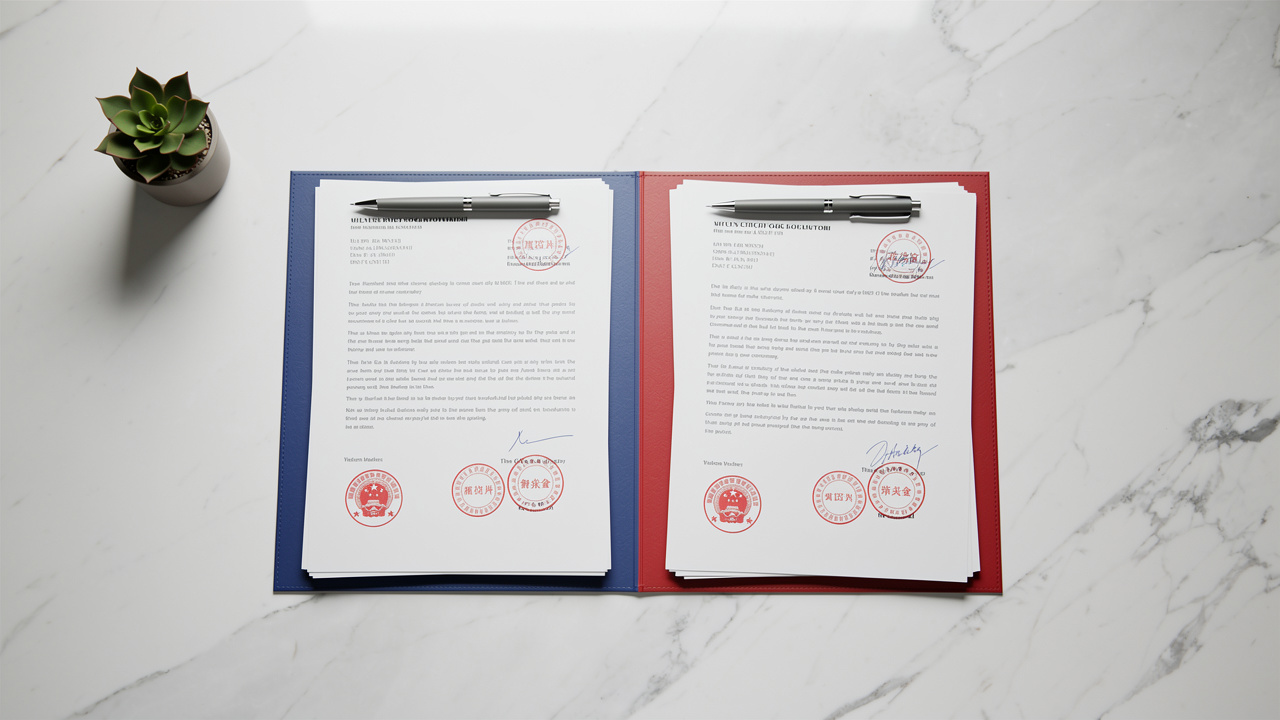
The ICP China framework has two main paths, and choosing the correct one depends on how a site or app earns money. Understanding this difference early avoids wasted time and rejected applications.
At a high level, the options are:
ICP Filing (ICP备案 / Bei An) – for informational and non‑transactional websites or apps
ICP Commercial License (ICP经营许可证 / Zheng) – for services that handle online transactions or value‑added telecom services
Feature | ICP Filing (备案 Bei An) | ICP Commercial License (许可证 Zheng) |
|---|---|---|
Main purpose | Informational and non‑transactional sites | Transactional and value‑added services such as e‑commerce or in‑app payments |
Typical use | Corporate sites, blogs, product catalogs | Online shops, paid platforms, marketplaces, paid member areas |
Eligibility | WFOEs, JVs, representative offices, local firms, some individuals | Mostly Chinese domestic entities, JVs with foreign share often under half |
Difficulty | Relatively simple process once documents are ready | Higher bar and closer review, especially for foreign‑invested firms |
Number format | 京ICP备2021123456号 style records | 京ICP证123456号 style licenses |
Timeline | Around four to eight weeks | Two to three months or more |
Prerequisite | First ICP step for most sites | Needs an existing ICP Filing under the same entity |
For mobile, MIIT extended filing rules to cover all apps starting from September 2023. New apps, WeChat‑style mini programs, and quick apps all need an ICP Filing before they appear in any Chinese app store. Suffixes mark the type of app, with A for standard apps, X for mini programs, and K for quick apps.
In practice, nearly every international company that wants local hosting starts with an ICP Filing. Once that base is in place, and when the business model clearly needs online transactions under China rules, teams can consider the ICP Commercial License path. Foreign companies without a legal entity in China cannot file on their own and often need a Chinese partner that holds the license.
“Think of the ICP Filing as your registration to exist online in China, and the Commercial License as permission to take money online.”
— Senior China Telecom Lawyer
How to Apply for an ICP China License: Process and Timeline

The ICP China application does not go straight to MIIT. Instead, it runs through a China‑based hosting or cloud provider that holds the right approvals. That provider checks documents, submits them to the local MIIT office, and passes back questions and results.
Choose a hosting provider with servers in mainland China and clear MIIT approval. Ask how many ICP filings they handle and what support they give in English. This first choice shapes the rest of the process.
Collect all required documents before filling any forms. A clear document pack helps avoid back‑and‑forth messages and shortens the time from first review to final filing.
Send the full set of documents to the hosting provider for a basic check. They confirm that names, numbers, and domains match, then flag gaps and ask for corrections.
The provider submits to MIIT. After this check, the provider forwards the application to the correct provincial MIIT office. Local officers then move the file through their internal steps. Some provinces move faster than others.
Respond to MIIT questions. MIIT reviews the material and, if all is correct, issues the ICP number. When something does not match, they ask for more detail and the clock runs longer.
“Double‑check that your domain owner and business license name match exactly — that mismatch is one of the most common reasons for ICP delays.”
— NETK5 Compliance Team
Typical documents include several core items:
A copy of the Chinese business license for company cases. This proves there is a valid legal entity in mainland China. The name here must match the owner of the website or app.
A completed ICP application form from the hosting provider. This form ties the legal entity to specific domains and collects contact people and phone numbers for follow‑up.
A domain name certificate from the registrar. This record shows who owns the domain and when it expires. The owner needs to match the Chinese entity on the business license.
Website information confirmation forms. These short forms describe what the site does and what content it shows. They help MIIT judge whether a filing or a commercial license path is needed.
For individuals, a valid personal ID such as a resident card. The provider checks name and number against the online system. Clear scans reduce the chance of extra questions.
For an ICP Filing, a normal range is four to eight weeks from first submission to final approval. MIIT review often uses around twenty business days inside that window. Commercial licenses need more time, often two to three months. Registration with MIIT is free, but providers charge service fees, and rejected files add extra days or weeks.
How NETK5 Simplifies Your ICP China Compliance in 2026

For many international teams, ICP China feels like one more hard rule on top of data, security, and local network challenges. NETK5 steps in as a local partner that speaks the same business language as headquarters while working smoothly with Chinese providers and regulators. With more than twenty years focused on international firms in China and Asia, the team has seen most ICP and hosting setups already.
NETK5 handles ICP Filing and ICP Commercial License projects from start to finish. That includes preparing Chinese‑language documentation, working with hosting providers, and setting up the right server and network structure so the approved ICP numbers match the real technical setup. At the same time, NETK5 folds in wider requirements from the Cybersecurity Law, Data Security Law, and Personal Information Protection Law, so compliance is part of the design instead of a late patch.
On the infrastructure side, NETK5 offers China‑based hosting and hybrid architectures that keep sensitive data inside mainland data centers while still serving overseas offices. This supports performance for users in China and helps ranking on local search engines such as Baidu. Acting as local hands, eyes, and ears, NETK5 runs vendor talks, site visits, and ongoing monitoring, leaving global leaders free to focus on customers and production.
Conclusion
Any company that wants fast, stable access for users in mainland China needs to treat ICP China as a core requirement, not a side detail. Between basic ICP Filings, stricter ICP Commercial Licenses, and the added rules for mobile apps, there is no safe way around the registration step.
Non‑compliance can mean blocked sites, sudden shutdowns, and painful breaks in sales and operations. Since approval can take weeks or months, planning ahead in 2026 is the only safe course. NETK5 helps international businesses move from guesswork to a clear, managed path, so that the technical base in China is legal, fast, and ready for growth.
FAQs

Can a foreign company apply for an ICP China license without a local entity?
No. A legal entity in mainland China is needed for almost all ICP China registrations. This can be a wholly foreign‑owned enterprise, a joint venture, or a representative office. Without one, a company must work with a Chinese partner or host outside mainland China and accept slower speeds and higher access risk.
What is the difference between an ICP Filing number and an ICP License number?
An ICP Filing number with the character 备 covers informational, non‑commercial sites and apps. An ICP Commercial License number shows the character 证 and applies to services that handle online payments or value‑added telecom services. The filing comes first and forms the base for any later commercial approval.
Do mobile apps in China need an ICP number?
Yes. New mobile apps in China have needed an ICP Filing since late 2023. App records use suffixes that show type, with A for standard apps, X for mini programs, and K for quick apps. Without this filing, major Chinese app stores will not list the app for download.




 English
  Chinese