Latest Developments in IT Support Strategies in China
Quick Summary: China’s 2027 push for 70% AI agent adoption forces IT support teams to treat every deployment as a regulated system from day one, mapping data flows, access roles, and failover plans before rollouts. Global help desks can’t handle China operations alone-localized layers with strict data controls and audit logs are now mandatory under CAC rules, especially for sensitive sectors like healthcare. Unlike Western AI support, which focuses on tool access, China demands oversight of inputs, outputs, and vendor chains, requiring compliance checks in every ticket. By 2026, firms must split support into China-specific and international tracks, with NETK5 offering localized infrastructure and secure network design to bridge the gap.
China’s August 2025 AI+ policy push makes localized infrastructure and controlled data flows urgent. By 2027, smart terminals and agents should exceed 70% penetration. These IT support trends China firms face also sit under cyber, data, privacy, algorithm, and AI rules. A global help desk can expose logs, remote access, and model inputs. Strong China IT support strategies use modular local systems with governed global links. This is the core issue for IT outsourcing China 2026 decisions.
China’s AI Push Is Making Infrastructure Governance an IT Support Issue
The 2027 target changes the support timetable
China aims for AI agents and smart terminals to exceed 70% adoption by 2027 across six priority areas, including industry, public services, and healthcare, under the State Council’s AI+ plan. That makes IT support trends China a governance task, not just a ticket desk.

Support teams need to:
- Map where AI tools touch customer, patient, or production data.
- Set access roles, logs, patch plans, and incident owners.
- Test network capacity and backup links before each rollout.
Tip: Treat every AI pilot as a production system from day one. Regulated firms cannot bolt controls on later.
| Support focus | Practical check |
|---|---|
| Data access | Limit sensitive records by role |
| Resilience | Test failover and recovery |
| Audit trail | Retain system and admin logs |
These IT support trends China reward firms that build control into infrastructure early.
Also Read: Cybersecurity Services in China: Protect Your Business in 2026
Why Global Support Models Are Splitting Into China and International Layers
China operations need a support layer with its own rules, access paths, and records. A global help desk cannot assume it can view or move local data freely.
The support controls businesses need to document
Keep a clear control register for both teams:
| Control | China layer | International layer |
|---|---|---|
| Data access | Named local owners | Approved overseas recipients |
| Incident response | Local escalation route | Global coordination route |
| Remote support | Logged, limited sessions | Need-to-know access |
- Map every support tool that can export, download, or remotely view China data.
- Set approval rules for overseas access and retain audit logs.
- Define who leads during outages, ransomware, or safety events.
China’s CAC requires safeguards for outbound data and prompt reporting of data security incidents. The official rules also set thresholds for assessments, contracts, or certification.
Treat the China layer as a controlled operating model, not an isolated IT team.
Also Read: Comparing Local vs Global IT Support Providers in China
The China-versus-West AI Difference Matters at the Service Desk
From choosing a model to supporting an ecosystem
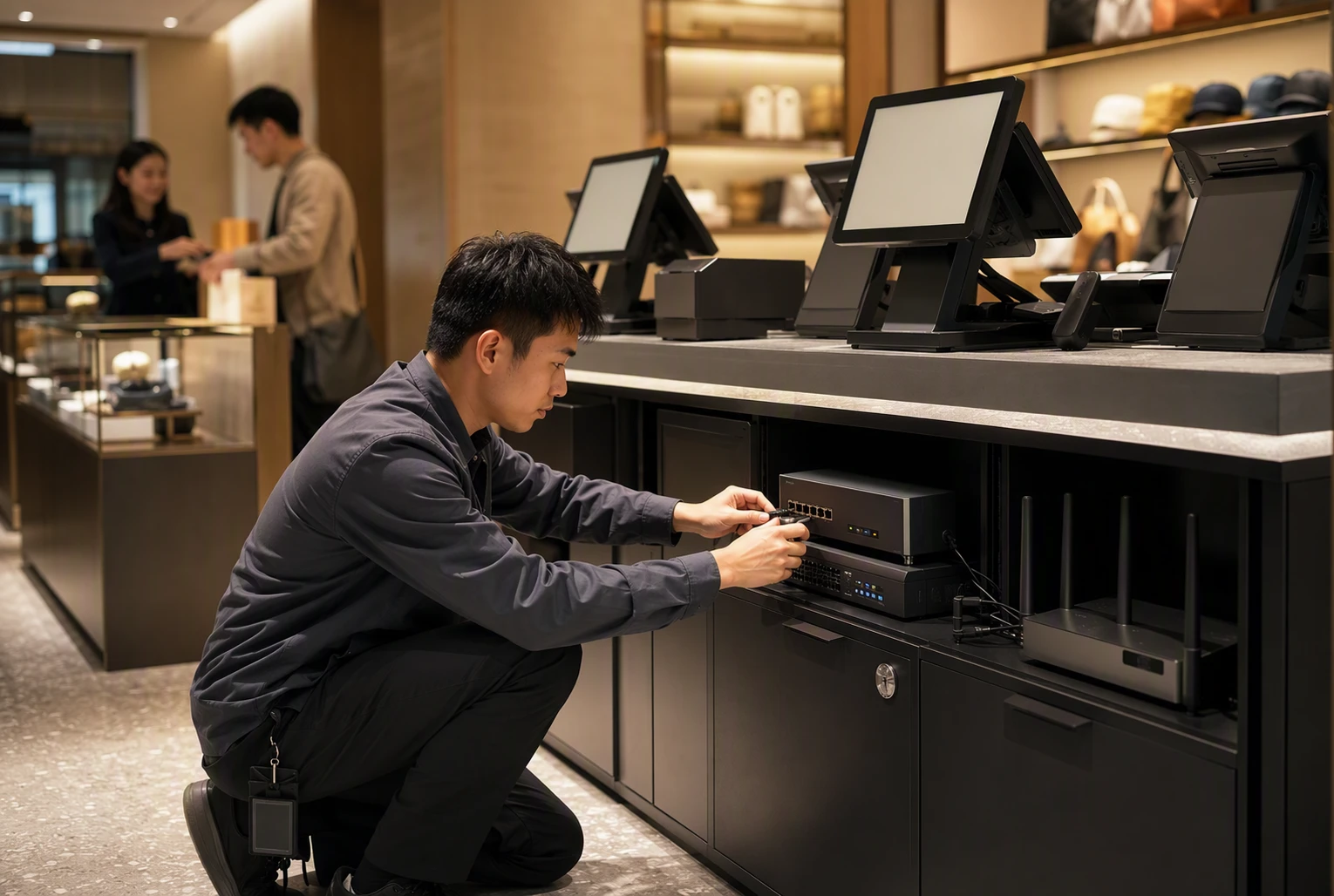
In Western offices, AI support often starts with model choice and user access. In China, the service desk must also manage data sources, content controls, logs, vendor links, and local network paths.
China’s rules require public generative AI services to protect input data, avoid unnecessary personal data collection, and address illegal content promptly, according to the official Interim Measures. That changes first-line support.
| Western support focus | China support focus |
|---|---|
| Enable approved tool access | Validate the whole service chain |
| Fix user errors | Protect inputs, records, and routing |
| Manage one vendor | Coordinate local platform and controls |
- Map where prompts, files, and outputs travel.
- Set clear rules for sensitive records.
- Escalate outages that affect approved AI access.
Treat AI tickets as architecture and compliance tickets, not ordinary password resets.
Also Read: Top 10 International IT Support Solutions for Global Businesses
What Businesses Should Change in Their 2026 IT Support Plan
Treat IT support as a control function, not a ticket desk. China’s AI-content rules require visible and metadata labels for covered AI-generated content, effective from September 2025, according to the CAC notice.
- Map every AI tool, data flow, and owner.
- Set approval rules for customer, health, and operational data.
- Keep audit logs, backups, and tested recovery steps.
- Build label checks into AI content workflows.
| Plan area | 2026 change |
|---|---|
| 维持 | Add compliance triage |
| 安全 | Test incident response |
| AI use | Track labels and metadata |
Tip: Give local IT, legal, and business teams one shared incident process.
Build compliant, resilient IT support in China with NETK5. Talk to its team about secure networks, data controls, and dependable local support.
Frequently Asked Questions
Q1: How is China’s AI governance reshaping global IT infrastructure strategies?
It makes data location, access control, audit trails, and failover planning core support tasks. Global firms must design compliant China operations from the start.
Q2: What are the key differences between China’s AI deployment model and Western approaches?
China places stronger focus on local data handling, content controls, and provider duties. Firms need clear ownership, approved workflows, and local response plans.
Q3: How can NETK5 leverage China’s AI infrastructure for international IT support services?
NETK5 can pair local infrastructure support with secure network design, data controls, and practical incident response for international teams operating in China.
总结
IT support in China now needs secure design, clear data control, and tested recovery. AI content-label rules reinforce the need for traceable, compliant systems.






 Chinese
  English