

Cybersecurity Services in China: Protect Your Business in 2026
Quick Summary: China’s updated Cybersecurity Law, effective January 1, 2026, increases fines, expands overseas legal reach, and mandates stricter product certification. Businesses must prioritize risk assessments, monitoring, incident response, and certification support to comply and avoid penalties. Foreign firms face heightened risks from cross-border data flows and extraterritorial enforcement, making proactive cybersecurity measures essential.
China’s amended Cybersecurity Law took effect on January 1, 2026. That changed the risk fast. Cybersecurity China now brings higher fines, wider reach over overseas acts, and new liability for uncertified products. For SMEs, foreign firms, and regulated sectors, Cybersecurity China is now an operating issue. This guide explains which Cybersecurity Services matter most, where Cybersecurity China exposure sits, and how Data Protection China rules raise the bar for managers.
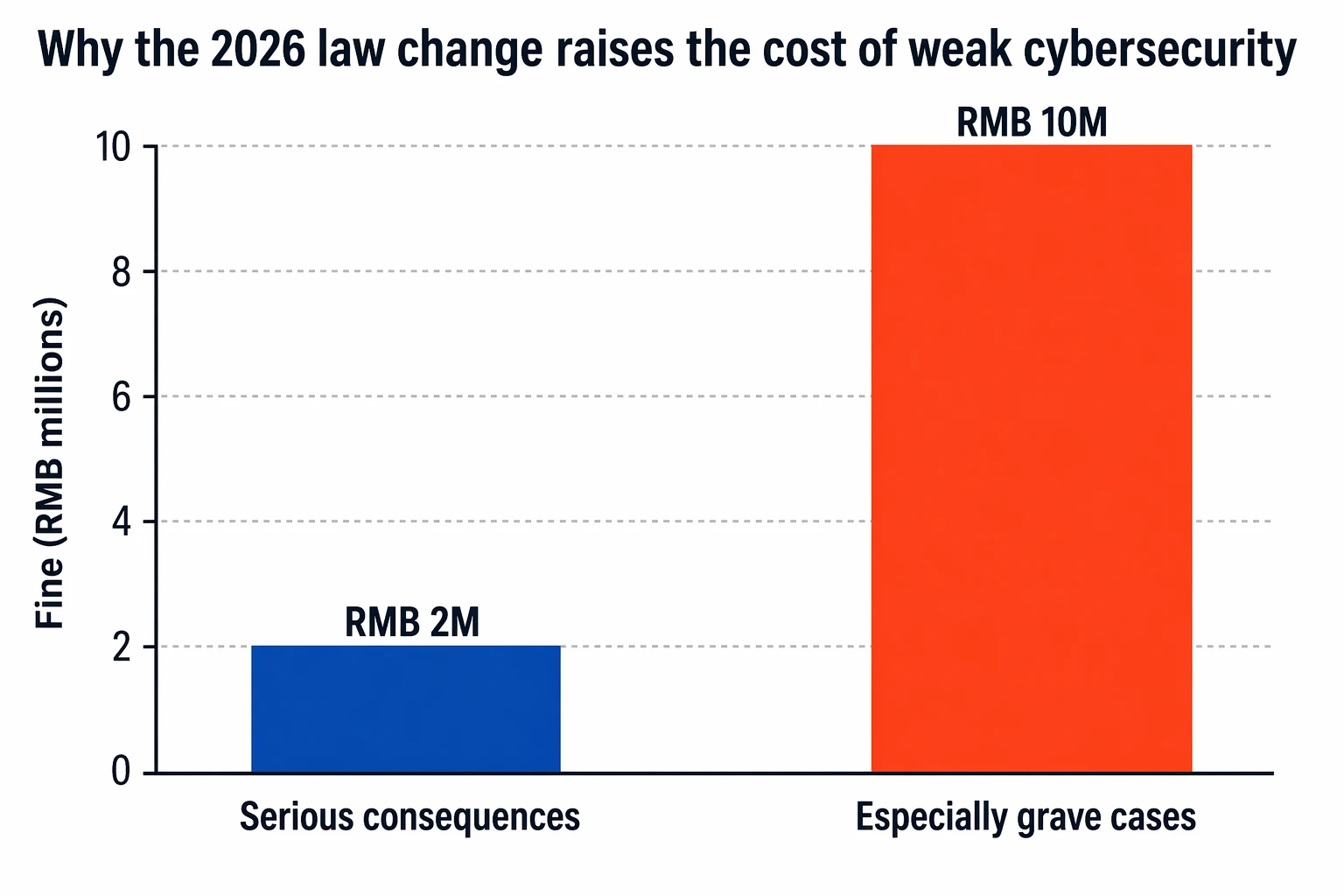
Why the 2026 law change raises the cost of weak cybersecurity
Higher fines now apply much earlier. China’s amended Cybersecurity Law took effect on January 1, 2026, and it gives regulators more room to fine companies before a breach turns into a disaster. The Library of Congress summary says maximum penalties now reach RMB 2 million for serious consequences and RMB 10 million for especially grave cases. That changes the math for SMEs and foreign firms in China.
Certification and testing are now a hard compliance gate. Products and services that need mandatory security certification or testing can trigger penalties if they fail that gate. Latham’s breakdown notes new penalties for selling or providing critical network equipment and dedicated cybersecurity products that are uncertified or untested.
Weak controls now cost more before, during, and after an incident.
Also Read: How to Ensure Security During Office IT Installation in China
Which cybersecurity services businesses in China now need first
Start with the services that cut legal and operating risk fastest. Most firms should handle three first.
-
Risk assessments and remediation plans
Map every China system, rank risk, then fix gaps in order. For many firms, this starts with MLPS scoping, access reviews, patching, vendor checks, and data flow mapping. A fast assessment stops you wasting budget on tools before you know your weakest points. -
Monitoring, logging, and incident response
You need clear logs, alerting, and a tested response plan. China’s 2021 vulnerability rules say providers and operators must keep vulnerability intake logs for at least 6 months and fix issues quickly, according to China’s State Council bulletin.If you cannot detect an incident, you cannot report or contain it on time.
-
Certification support for security products
If you sell connected products, certification support is now urgent. China’s Cybersecurity Label rules take effect July 1, 2026, and product makers may need testing, filing, and possible retesting after key changes, under the CAC’s 2026 measures.
Also Read: Comparing Local vs Global IT Support Providers in China
What foreign firms and regulated sectors should watch most closely
Foreign firms face more risk when China data, overseas staff, and global systems meet. The amended law now reaches some overseas conduct that harms China’s cybersecurity, not just attacks on critical infrastructure, according to the Library of Congress summary. Cross-border data flows also stay tightly watched. CAC rules still require security assessment, contracts, or certification in some cases, while giving limited exemptions for trade, HR, and urgent life or safety needs under the CAC cross-border data rules.

- Luxury retail: POS, CRM, and member data.
- Oil and chemicals: industrial control and supplier access.
- Healthcare and elderly care: sensitive health data and vendor systems.
the 2025 amendment that reset the compliance baseline
China reset the baseline on 28 October 2025, when the NPC Standing Committee passed the Cybersecurity Law amendments, effective 1 January 2026 under the official NPC decision. For businesses, the shift is simple:
- faster penalties
- higher fines
- tighter personal data alignment
- broader overseas exposure
The amendment now ties personal information handling directly to China’s PIPL and raises fines up to RMB 10 million for especially serious consequences, as summarized in CSET’s 2026 translation and notes.
If your China setup still reflects 2024 controls, it is already behind.

Need China-ready cybersecurity support for 2026? Talk to NETK5 for practical help with compliance, infrastructure, and risk control.
Frequently Asked Questions
Q1: What are the most critical cybersecurity threats businesses face in China in 2026?
Ransomware, supply chain attacks, cloud misconfigurations, insider leaks, and data theft rank highest. Foreign firms also face cross-border data risks, phishing in Chinese and English, and regulatory exposure when weak logging, access control, or incident response hides a breach.
Q2: How has China’s amended Cybersecurity Law impacted cybersecurity service requirements in 2026?
The 2026 changes push firms to prove control, not just claim compliance. You now need stronger monitoring, incident reporting, data mapping, vendor checks, and sector-specific safeguards. High-risk firms may also need local support, audits, and faster evidence preservation.
Q3: What legal liabilities do foreign firms face regarding cybersecurity compliance under Chinese law 2026?
Foreign companies can face fines, service suspension, license impact, civil claims, and personal liability for managers. Risk grows if headquarters accesses China data without controls. Extraterritorial reach matters when overseas systems process, store, or expose regulated business information.
总结
China’s amended Cybersecurity Law took effect on January 1, 2026, with higher penalties and broader overseas exposure under the official CAC text. The core takeaway is simple: map your China risk, secure key systems, tighten vendors, and prepare sector-specific controls now.






 Chinese
  English