
IT Outsourcing China: A Practical Guide for SMEs (2026)
How IT Outsourcing In China Can Benefit Your Company (2026 Update)
CNY 3,000 per hour.
That is a realistic estimate of how much IT downtime costs a 30-person SME in Shanghai when you factor in lost productivity, delayed orders, and frustrated staff.
Downtime is not only a full internet or server outage. It also includes:
the five minutes people spend staring at the screen while email loads
the time wasted fighting with the printer
the “quick reboot” that turns into half an hour
Spread across your whole team, these small interruptions add up quickly.
If your office feels like this, it is time to bring in proper help. For many foreign-invested companies and growing local SMEs, IT outsourcing in China is a practical way to reduce downtime, control risk, and keep costs predictable.
Instead of hiring a full-time engineer, you work with a specialist IT outsourcing company that handles your infrastructure end to end. A mature provider such as NETK5 will typically:
keep computers and servers updated
make sure 备份 run correctly
manage security and patching
provide an IT helpdesk so users get support when something breaks
You and your managers can then focus on running the business, not on chasing IT issues.
Why IT Outsourcing In China Is Booming (2026 Market Outlook)

Before we look at the four main reasons SMEs choose IT outsourcing China providers, it helps to understand the scale of the market.
In 2024, China’s IT services sector generated over USD 100 billion in revenue.
Within that, the IT outsourcing segment was worth around USD 46.6 billion in 2024.
Projections show this segment growing at more than 10% per year, reaching close to USD 84 billion by 2030.
“Information technology and business are becoming inextricably interwoven.” — Bill Gates
Several trends drive this growth:
Rising complexity
Cloud platforms, cybersecurity, and hybrid networks now require skills that are difficult for one internal engineer to cover alone.Digital transformation pressure
Companies in China are adopting cloud, data analytics, and automation at speed. They rely on IT outsourcing partners to design, run, and support these modern environments.Cost and flexibility
Especially for foreign subsidiaries with lean headcount, it is easier and more predictable to buy IT as a managed service than to build a full in-house team.
For SMEs in Shanghai, Beijing, Shenzhen, and beyond, this means there is now a mature, competitive market of IT outsourcing China-based providers that can offer enterprise-grade support at SME budgets.
Reason 1: Avoid The Cost Of Hiring Staff
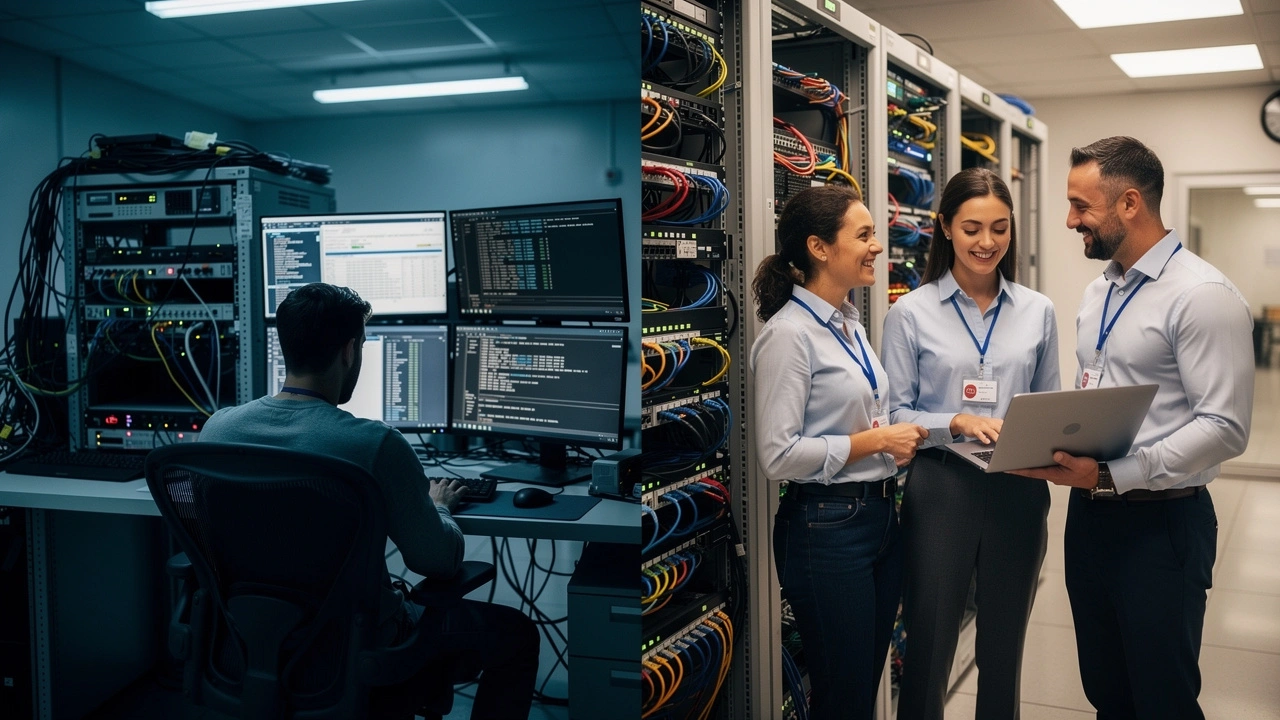
Your first instinct might be to hire an in-house IT support specialist. On paper, it sounds convenient: they sit in your office, report directly to you, and feel like part of the team.
In practice, hiring internally becomes expensive and time-consuming:
Unless you are confident with IT yourself, it is hard to assess candidates properly. Many managers end up guessing, hiring based on personality, or paying a recruitment agency to help.
Once hired, you need to manage, train, and retain that person. You must plan for their sickness, holidays, and career progression, and include them in team-building activities and annual bonuses.
To do their job well, they need specialized tools and software to monitor the infrastructure, manage endpoints, patch systems, and deploy applications. These tools often come with subscription fees that do not make sense for a single small in-house team.
A good IT outsourcing China provider changes this equation.
For a predictable monthly fee, an outsourcing partner:
recruits, vets, and trains a team of engineers instead of just one person
buys professional monitoring and management tools once, then shares them across many clients, so you only pay a fraction of the full cost
provides automatic coverage when your usual engineer is sick, on holiday, or assigned to a project, so you are never left without support
In many cases, the monthly outsourcing fee is lower than the fully loaded cost of one mid-level in-house engineer, especially in Tier 1 cities like Shanghai.
In-House Vs IT Outsourcing In China: Cost Comparison For Shanghai SMEs
To make this more concrete, here is an example comparison for a 30–50 person SME in Shanghai. Figures are estimates in CNY per month and will vary by industry and requirements, but they illustrate the general picture.
| Cost Component | In-House IT Engineer (Monthly, CNY) | IT Outsourcing For 30–50 Person SME (Monthly, CNY) |
|---|---|---|
| Base salary (Shanghai, mid-level engineer) | 25,000 – 35,000 | – |
| Employer taxes & benefits (~30%) | 7,500 – 10,500 | – |
| Training & certifications | 1,000 – 2,000 | Included |
| Professional tools & monitoring software | 2,000 – 4,000 | Included |
| Overtime / temp cover for holidays & sickness | 2,000 – 3,000 | Included |
| Estimated total monthly cost | 37,500 – 54,500 | 15,000 – 30,000 (typical managed services fee) |
A few key points:
The in-house total excludes hidden costs like recruitment fees, office space, and HR overhead.
The outsourcing fee usually includes a team of engineers, 24/7 monitoring, documentation, and structured processes.
If your company loses even one hour of productivity at CNY 3,000 per hour several times a month, the cost of downtime alone can quickly exceed the monthly fee for an IT outsourcing partner.
For many SMEs, this cost structure is the main financial reason to choose IT outsourcing in China over building an internal IT department from scratch.
Reason 2: Cover All Needs With A Full IT Team

You can hire a highly specialized engineer, or a generalist who can “do a bit of everything.” The problem is that IT is too broad for one person to master every area.
Consider just a few examples:
running and hardening Windows or Linux servers
designing and securing LAN, WAN, and Wi-Fi networks
managing Microsoft 365, Azure, or other cloud platforms
handling backups, disaster recovery, and business continuity
dealing with ransomware, phishing, and compliance questions
The skills, tools, and experience required for these topics are very different. Expecting a single in-house engineer to keep up with all of them is unrealistic.
借助性能和使用趋势的 IT outsourcing China providers, you gain access to a full team:
each engineer tends to specialize in certain areas (for example, networks, cloud, cybersecurity, user support)
complex or unusual requests can be handed to the right specialist, while routine tasks stay with the primary support engineer
your projects are handled faster and with less risk, because the person doing the work has seen similar environments before
On top of that, a serious outsourcing partner maintains a network of trusted external specialists for related needs:
hardware and software vendors
electricians and low-voltage cabling teams
HVAC and CCTV installers
phone and PBX specialists
For an SME, building and coordinating this network alone inside your company would be almost impossible. Working with the right IT outsourcing China partner gives you this extended support network from day one.
Reason 3: Flexible Team Augmentation

For larger SMEs or regional headquarters, hiring your own internal IT support team can still make sense. You might have an IT manager and one or two engineers who handle the everyday issues your users face.
Even then, your internal team is usually sized and trained for “business as usual”, not for rare or specialized projects. A few examples:
Wi-Fi surveys for a new office or warehouse require special tools and training to produce accurate heat maps and coverage plans.
Network cabling projects need extra manpower on-site for a short period of time.
Data recovery from failed disks or servers often calls for dedicated tools and lab-grade procedures.
Server hosting or relocation might involve work in a data center, dealing with providers and schedules.
Around-the-clock coverage for a product launch, factory migration, or critical system cutover may not justify hiring dedicated night-shift staff.
This is where IT outsourcing in China works well as team augmentation:
your internal team continues to handle daily tickets, user questions, and minor changes
the outsourcing partner provides specialist engineers and extra capacity when a project appears that is outside your team’s comfort zone
both sides work together, sharing documentation and responsibility, so your internal IT department gains experience instead of being sidelined
IT outsourcing does not mean you must eliminate internal IT. In many companies, the most effective model is co-managed IT, where internal staff and an external IT outsourcing China partner share the workload based on skills and capacity.
Reason 4: Knowledge Transfer And Expert Training
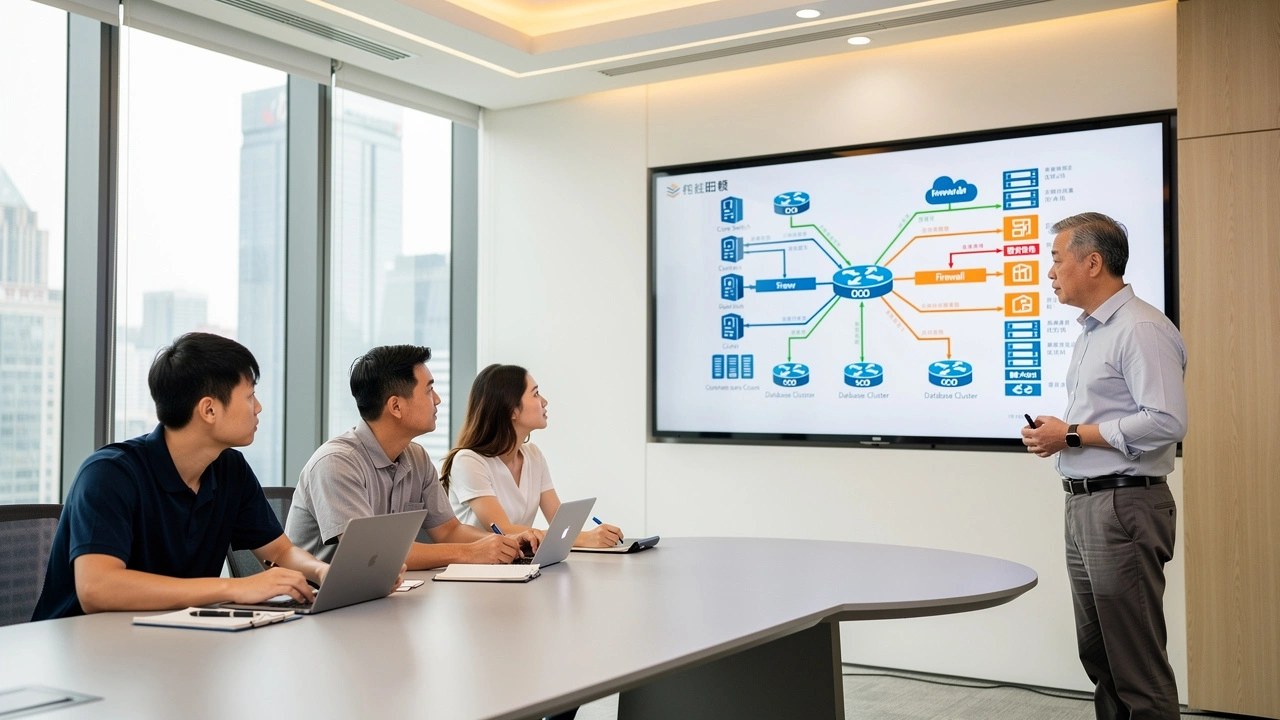
Building on the team-augmentation model, a good question is: why not train your own experts using your outsourcing partner’s knowledge?
Your IT partner already understands the technologies your business relies on. They know your network, servers, cloud services, and applications. It makes sense to have them train your internal staff, at least for routine tasks and first-line support.
A structured knowledge-transfer plan can include:
regular workshops on topics such as Microsoft 365 administration, security basics, or backup checks
shadowing sessions, where your staff sit with the external engineer during key changes or projects
proper documentation of procedures, so your team can handle day-to-day tasks without always opening a ticket
Handled well, this has several benefits:
you keep control of your infrastructure and avoid dependency on one outside vendor
your internal people still have an expert team behind them for advanced troubleshooting and strategic projects
technical training motivates and retains your staff, because they feel invested in and see their skills grow
fresh ideas from the outsourcing partner can inspire your team to apply technology in smarter ways across the business
For many foreign-invested companies, this mix—an internal coordinator plus an IT outsourcing China partner focused on complex work and training—is a very effective long-term setup.
Tier 1 Vs Tier 2 Cities: Where IT Outsourcing In China Delivers Most Value
When you look at IT outsourcing in China, location matters. The needs of a 40-person sales office in Shanghai are different from a factory outside Chengdu or a shared service center in Dalian.
Tier 1 Cities (Shanghai, Beijing, Shenzhen, Guangzhou)
In Tier 1 cities:
salaries and office costs are high, especially for experienced IT engineers
competition for bilingual IT talent is intense, as multinationals and local tech companies hire from the same pool
many SMEs operate lean offices that must still meet global security and compliance standards
Here, IT outsourcing China-based teams in Tier 1 cities help you:
keep headcount under control while still meeting global IT policy requirements
gain access to English-speaking engineers who understand foreign corporate environments
receive fast on-site support for offices, labs, or showrooms where physical presence is sometimes required
Tier 2 Tech Hubs (Chengdu, Dalian, And Others)
Cities like Chengdu and Dalian have become major delivery centers for IT and shared services:
they offer large pools of engineers and lower operational costs
many outsourcing providers base their service centers there while still supporting clients nationwide
For SMEs and factories in or near these cities, working with an IT outsourcing China provider that has a Tier 2 operations center can:
provide cost-effective remote support with occasional on-site visits
make it easier to support multiple locations (for example, a Shanghai HQ and inland factories) from one coordinated team
combine lower-cost back-end operations with Tier 1 account management if needed
The key is to choose a partner with the right blend of local presence and national coverage, so you get consistent service quality regardless of where your offices and plants are located.
How To Choose An IT Outsourcing Partner In China
Cost and technical skills matter, but for foreign companies and regulated industries, they are not enough. The difference between a good and a bad IT outsourcing China partner is often in governance, transparency, and security.
1. Governance And Transparency
Many outsourcing relationships fail not because engineers lack knowledge, but because:
there is no clear documentation of the environment
access rights are not controlled or reviewed
reporting is irregular or incomplete
Look for a partner that:
documents network diagrams, system configurations, and procedures clearly
shares that documentation with you and updates it after changes
provides regular reports on incidents, ticket volumes, patch status, and project progress
This kind of governance gives both headquarters and local management confidence that the IT environment is understood and under control.
2. Security And Compliance
Outsourcing IT does not remove your legal responsibility for data security and compliance with Chinese laws such as the Cybersecurity Law (CSL), Data Security Law (DSL), and Personal Information Protection Law (PIPL).
“If you think technology can solve your security problems, then you don’t understand the problems and you don’t understand the technology.” — Bruce Schneier
Ask potential vendors:
how they manage administrator accounts and remote access
which security controls (firewalls, endpoint protection, monitoring) they put in place by default
whether they follow any recognized standards (for example, ISO 27001) in their own operations
how they handle and report security incidents
Make sure contracts and service-level agreements (SLAs) clearly describe who does what in the event of an incident or audit.
3. Integration With Global IT
For international groups, the local IT outsourcing China vendor must cooperate smoothly with global IT teams:
key staff should be comfortable in English—both spoken and written
they should understand and apply global IT standards set by headquarters
they need experience with platforms such as Microsoft 365, Azure, SAP, or global ERP/CRM systems
This avoids conflicts between “how we do it globally” and “how the local vendor prefers to work,” which can create risk and confusion.
4. Regular Independent IT Audits
A powerful way to keep governance strong is to combine outsourcing with periodic independent IT audits. These audits give headquarters and local management a clear view of:
infrastructure configuration – Are networks, servers, and cloud services set up securely?
cybersecurity controls – Are protection measures adequate and kept up to date?
access management – Who has access to what, and is the “least privilege” principle applied?
documentation quality – Is there enough information to recover from incidents and change providers if needed?
vendor performance – Is the outsourcing partner meeting agreed SLAs and reporting requirements?
This approach lets you benefit from the flexibility and cost advantages of IT outsourcing in China, while still maintaining the level of oversight your global stakeholders expect.
总结
For SMEs and international companies operating in China, IT outsourcing is no longer just a way to cut costs. It has become a practical strategy to:
Avoid the full cost and risk of hiring in-house IT staff in expensive Tier 1 cities.
Access a complete team of specialists instead of relying on a single generalist.
Augment your internal IT department flexibly for projects, peak workloads, and 24/7 coverage.
Transfer knowledge and train your own people, so you stay in control while still having expert backup.
Combined with the strong growth of the IT outsourcing China market and the rising importance of cybersecurity and compliance, outsourcing has become a natural fit for many Shanghai-based and China-wide SMEs.
Is IT outsourcing a good match for your business?
Chances are, it is.
If you operate in China and want a clearer picture of your options, a short call with a managed services provider such as NETK5 can help you assess whether outsourced IT support is the right fit for your company.


 Chinese
  English