
Cost of IT Installation in Shanghai: 2026 Guide
Setting up IT infrastructure in Shanghai involves more than just buying computers and plugging in a router. For international businesses, the costs can surprise you — especially when compliance requirements, local vendor dynamics, and equipment quality all factor in.
The cost of IT installation in Shanghai for a mid-size office of 20–50 people typically ranges from ¥80,000 to ¥300,000+ depending on scope, equipment tier, and compliance needs. That covers hardware, cabling, software licensing, and initial setup. Ongoing managed IT services add a separate monthly cost. This guide breaks down each cost component, compares in-house hiring versus outsourcing, and explains what causes budgets to vary — so you can plan with confidence before your project starts.
Read on for a practical, numbers-based breakdown.
Key Takeaways
Hardware, cabling, software, and compliance architecture are the four core cost buckets every Shanghai IT project must budget upfront
Professional-grade equipment from brands like Dell, Lenovo, Fortinet, and Cisco Meraki is non-negotiable in managed business environments
For companies with 65 or fewer users, outsourcing to a Shanghai-based MSP is almost always cheaper than hiring a full-time IT engineer
China’s CSL, DSL, and PIPL compliance requirements add real cost line items that cannot be skipped or deferred
Engaging a local IT partner with bilingual capabilities early in the process prevents the expensive mistakes that come from navigating the market alone
What Does IT Installation in Shanghai Actually Cost in 2026?

Alt text: “Modern Shanghai office with business-grade IT workstations”
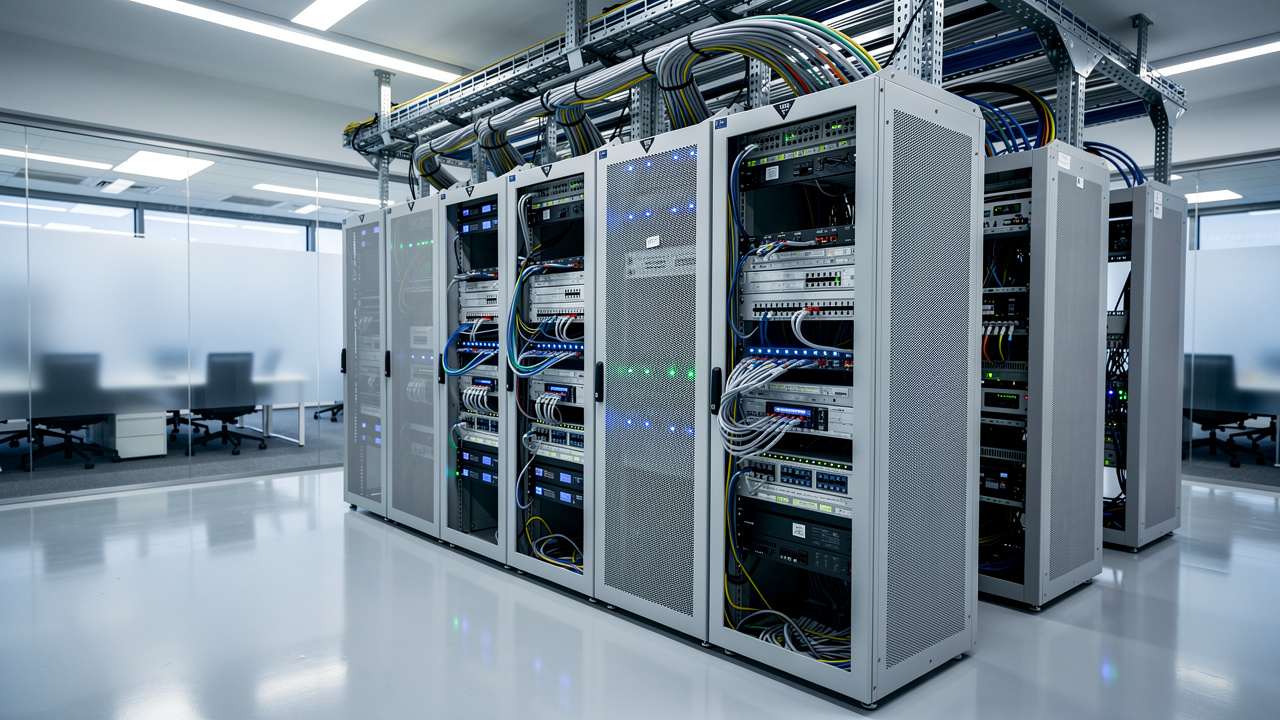
Office IT installation in Shanghai breaks into four primary cost buckets: hardware and equipment, network cabling and infrastructure, software licensing, and internet connectivity. For a professionally configured environment serving 20–50 users, here is a realistic range across each category.
| Cost Category | Indicative Range (RMB) | Notes |
|---|---|---|
| Network switches & firewall (Fortinet, Cisco Meraki) | ¥15,000 – ¥60,000 | Varies by throughput and port count |
| Wi-Fi access points (Ubiquiti UniFi, Cisco Meraki) | ¥8,000 – ¥25,000 | Dependent on office size and layout |
| Server or NAS (Dell, Lenovo) | ¥20,000 – ¥80,000 | On-premises storage and compute needs |
| Structured cabling and installation labor | ¥15,000 – ¥50,000 | Floor area and building complexity — official fee rate standards for Shanghai construction and installation projects are published by municipal authorities, as detailed in resources such as the 上海市建设工程概算相关费率标准 沪建标定联〔2023〕486号. |
| Meeting room AV (displays, video conferencing) | ¥20,000 – ¥80,000 | Per room; varies with brand and spec |
| Workstations / laptops (Dell, Lenovo Pro series) | ¥5,000 – ¥12,000 per unit | See note below on retail hardware |
| Compliance architecture (ICP, CSL/DSL/PIPL controls) | ¥10,000 – ¥40,000+ | Non-negotiable; must be scoped upfront |
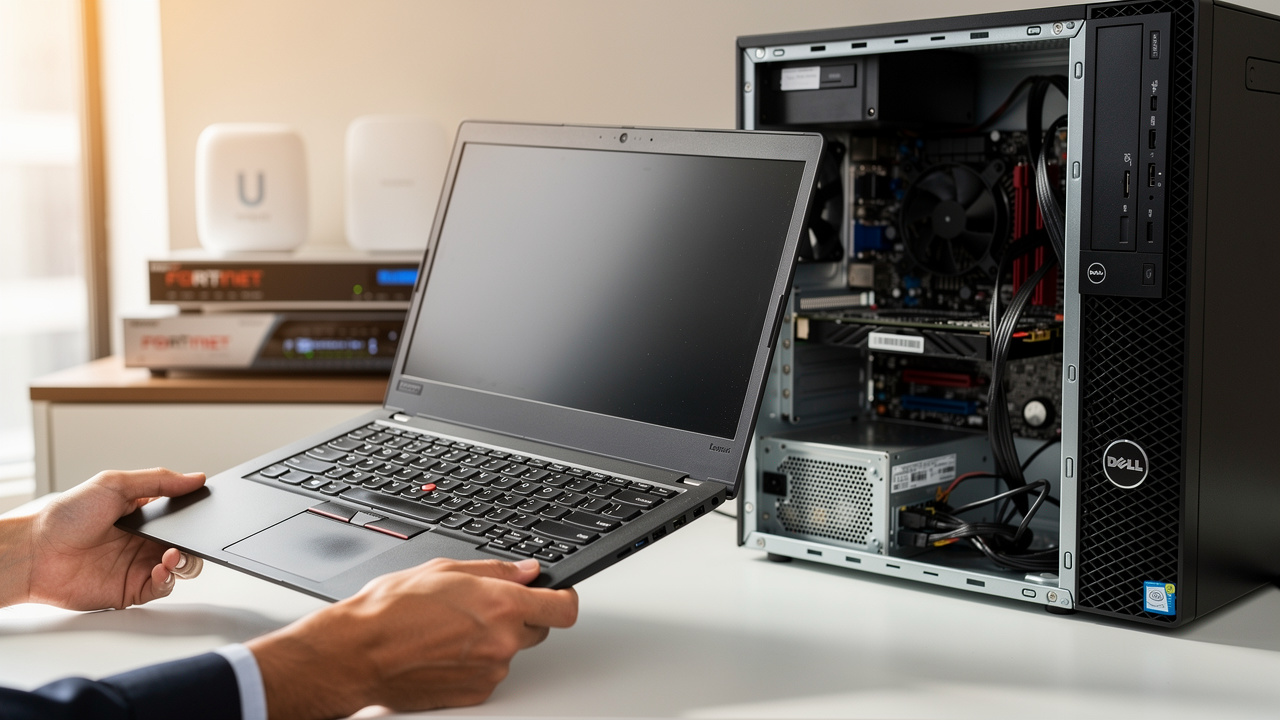
One point that catches many international businesses off guard: endpoint sourcing matters enormously. Purchasing laptops or desktops from retail platforms like Taobao or JD.com will almost certainly land you consumer units running Windows Home edition — not Windows Pro or Enterprise. These retail units typically come pre-loaded with software you do not want anywhere near a corporate environment, including 360 Safe, and they do not include a 3-year business warranty or enterprise support contract. That creates security gaps, device management headaches, and warranty problems that cost far more to fix than the initial saving justifies.
A note on retail hardware: In a professional environment, buying a laptop off a consumer platform is a false economy. You lose enterprise management features, proper licensing, and meaningful warranty coverage — all at once. Always specify business-grade endpoints from the start.
Always specify business-grade endpoints from Lenovo ThinkPad/ThinkCentre or Dell Latitude/OptiPlex lines, with genuine enterprise licensing and warranty — sourced directly through authorized business channels, not retail marketplaces.
Business-grade internet connectivity in Shanghai is competitively priced, but budget for dedicated SLA-backed lines rather than residential broadband. According to Numbeo, standard broadband in Shanghai runs around ¥77/month — but corporate dedicated lines with guaranteed uptime and SLA support run considerably higher, and they are the only appropriate choice for business operations.
In-House IT Engineer vs. Outsourced IT: What’s the Real Cost?

Alt text: “Bilingual IT engineers planning Shanghai office network setup”
This is the most consequential financial decision for most businesses setting up in Shanghai. The salary figure alone does not tell the full story — according to the Ministry of Health, Labour and Welfare, average monthly wages and total employment costs continue to rise, a trend reflected across Asia-Pacific labor markets including Shanghai.
Full In-House Cost Stack for One IT Engineer in Shanghai:
| Cost Item | Monthly Estimate (RMB) |
|---|---|
| Net salary (qualified engineer) | ¥11,000 – ¥15,000+ |
| Employer social insurance + housing fund (~35% of gross) | ¥5,000 – ¥7,500 |
| Annual bonus (13th month, prorated) | ¥900 – ¥1,300 — bonus and year-end payment norms are benchmarked against surveys such as the Average Annual Wages of Employees in Urban Units in 2025, which tracks bonus settlement levels at listed companies. |
| Recruitment fees (amortized) | ¥500 – ¥1,000 |
| Equipment and software licenses | ¥300 – ¥600 |
| Total monthly cost | ¥17,700 – ¥25,400+ |
And that is before accounting for skill gaps. A single engineer cannot be expert in network security, server administration, compliance, AV systems, and helpdesk support simultaneously. When that person is sick, traveling, or leaves the company, your IT operations have no backup.
Outsourced managed IT services through a Shanghai-based MSP like NETK5 work on flexible models designed to match actual usage. You can choose block-hour packages, scheduled on-site visits (half-day or full-day weekly), or hybrid models combining remote monitoring with periodic site visits. You pay only for support actually consumed — and you get access to a full team of specialists, not one generalist.
NETK5’s Shanghai-based engineers typically provide on-site response within approximately two hours, which makes outsourcing viable even for time-sensitive issues. With over 20 years of local vendor relationships and a bilingual team that bridges your global HQ with local Chinese execution, NETK5 removes the coordination overhead that comes from managing multiple contractors.
For businesses with 65 or fewer computer users, outsourcing to a qualified local MSP is almost always the more cost-effective and risk-controlled path.
What Drives Cost Variation — And How to Keep Your Budget Under Control
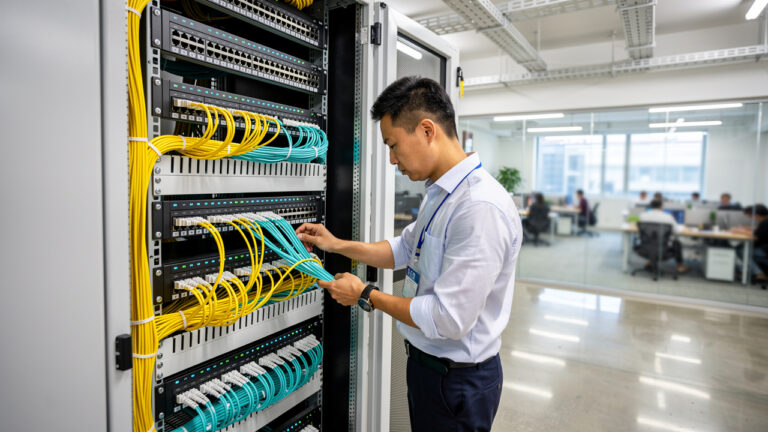
Alt text: “Technician installing structured cabling in Shanghai office”
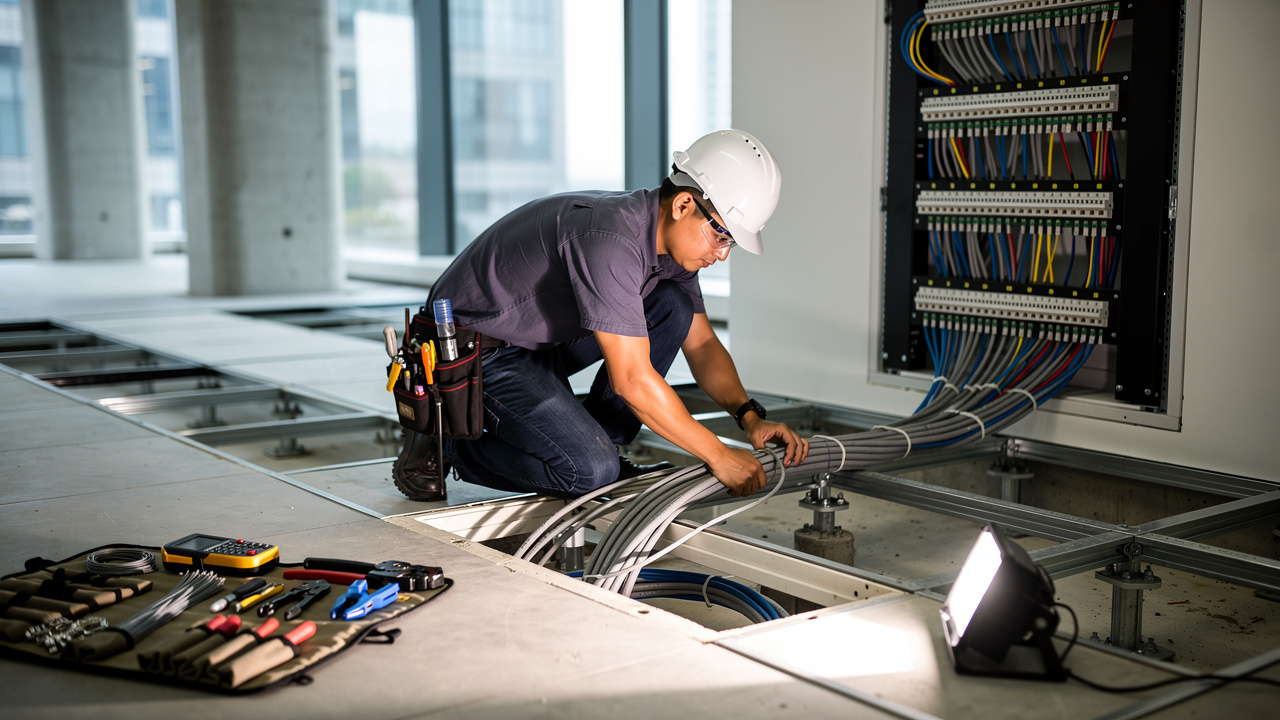
IT installation costs in Shanghai can swing dramatically based on a handful of variables. Understanding them lets you scope accurately and avoid expensive surprises.
The main drivers are:
Company size and user count — more users means more endpoints, more licensing, and more network capacity
Scope of services — a basic network build differs substantially from a full fit-out covering AV, CCTV, access control, and a dedicated server room
Building and venue characteristics — a Grade A Jing’an office has very different cabling and infrastructure challenges compared to an industrial facility in Jiading
Regulatory obligations — China’s Cybersecurity Law (CSL), Data Security Law (DSL), and Personal Information Protection Law (PIPL) impose real architectural requirements that must be designed in, not added later
Bilingual engineering requirements — essential when your local team needs to align with a global HQ IT department, and a factor that affects both staffing and project management costs
Here are five practical steps to keep your budget under control:
Define scope precisely before requesting quotes. Ambiguous scope is the single biggest cause of budget overruns. Specify user count, floor area, required systems (IT, AV, CCTV, access control), and known compliance obligations.
Use total cost of ownership, not salary, to compare in-house versus outsourced options. The numbers in the table above show why salary alone is a misleading comparison point.
Budget compliance architecture upfront. ICP filings, data localization controls, and PIPL-aligned access management are not optional line items. Retrofitting compliance after go-live costs two to three times more than building it in from the start.
Account for ongoing managed services as a recurring operational cost. Installation is one-time; monitoring, patching, helpdesk support, and regulatory updates are not.
Engage a local MSP with bilingual capabilities early. Getting realistic, locally-informed estimates before you finalize your budget prevents costly corrections that come from relying on global benchmarks that do not reflect Shanghai market conditions.
“The cost of getting IT wrong consistently exceeds the cost of doing it right.” — A principle that holds especially true in regulated markets like China, where compliance retrofits and hardware replacements carry compounding costs.
NETK5’s compliance-by-design approach maps data flows and configures controls before a single cable is run — preventing the expensive system redesigns and regulatory penalties that follow from treating compliance as an afterthought.
The Bottom Line

Alt text: “Modern conference room AV setup in Shanghai office”
IT installation costs in Shanghai in 2026 are manageable when you plan them correctly. With the right scoping, professional-grade equipment choices, and a reliable local partner, a 20–50 person office can be fully operational within two to four weeks — on budget and fully compliant from day one.
The cost of getting IT wrong consistently exceeds the cost of doing it right. Non-compliance penalties, retail hardware problems, and contractor coordination failures all carry price tags that dwarf the savings they appeared to offer.
NETK5 has supported international businesses in China since 2002, bringing local vendor relationships, bilingual teams, and compliance expertise to every engagement. Whether you are setting up a first Shanghai office or integrating a new manufacturing facility, contact NETK5 for a customized assessment based on your project scope, site conditions, and compliance requirements — visit netk5.com.cn.
Frequently Asked Questions
Alt text: “Business-grade enterprise laptops and IT hardware for Shanghai office”
How much does it cost to set up an office IT network in Shanghai for 20–50 people?
A professionally configured network for 20–50 users in Shanghai typically ranges from ¥80,000 to ¥200,000+ for hardware, cabling, and basic software setup using brands like Fortinet, Ubiquiti UniFi, Dell, and Lenovo. Compliance components and AV systems add to the baseline. Contact a local MSP for a scoped quote specific to your site.
Is it cheaper to hire an in-house IT engineer or outsource IT support in Shanghai?
A qualified Shanghai IT engineer costs ¥17,700–¥25,400+ per month in total employment cost once social insurance contributions, housing fund, bonuses, and equipment are included. For companies with 65 or fewer users, outsourcing to an MSP is nearly always more cost-effective, and provides access to a full team of specialists rather than a single generalist.
Why shouldn’t I just buy laptops and computers from Taobao or JD.com for my Shanghai office?
Retail units from Taobao or JD.com typically run Windows Home edition, lack enterprise management features, and come pre-loaded with unwanted software like 360 Safe — creating real security and manageability risks. They also do not include 3-year business warranty and support. Business-grade endpoints from Lenovo ThinkPad or Dell Latitude lines, sourced through proper business channels with enterprise licensing, are the right choice for a managed IT environment.
What compliance costs should I include in my Shanghai IT installation budget?
Budget for ICP filing requirements, data localization architecture, and alignment with CSL, DSL, and PIPL. These are non-negotiable legal obligations — not optional extras. They must be scoped and costed upfront, because retrofitting compliance controls after go-live is significantly more expensive than building them in from day one.




 Chinese
  English